
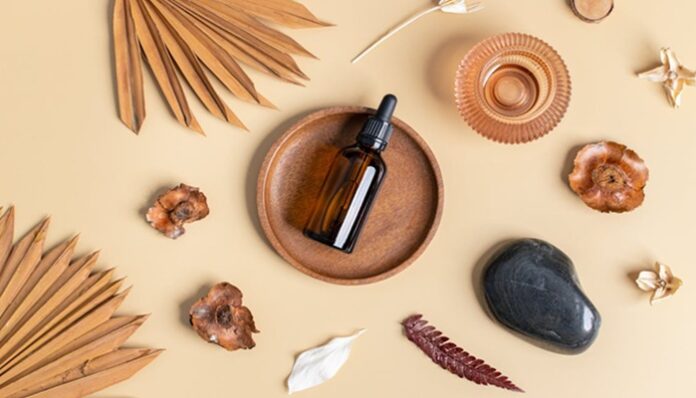
Fragrance and aromatics have been a vital part of Persian culture for at least 2,500 years, especially rosewater and floral distillations. Rosewater distillation began roughly a thousand years ago, and the city of Kashan has been a major center of production for at least 500 years.
The use of fragrance is based on the idea that aesthetics are linked to the harmony of the mind and body with cosmic or divine energy. Persian women have long used botanical-based fragrances that symbolize cleanliness, femininity, hospitality, sophistication, social identity, and refinement.
In the Biblical story of the Persian queen Esther, the narration describes how young Esther spent a year preparing for her presentation before King Xerxes. She spent six months completing a beautification ritual with oil of myrrh and another six months with perfumes and ointments. This ancient Persian practice of “layering” with oil and fragrance is deeply rooted in Persian tradition and has been passed down through the centuries to modern times.
Hallmark Characteristics of the Persian Fragrance Culture
Attars: The traditional Persian fragrance tradition was centered on a core group of alcohol-free “attars,” highly concentrated natural botanical perfume oils made through steam distillation of flowers, herbs, and other plants. The most important one is the rose attar, especially the rose damask. Other key attars include saffron, jasmine, amber, musk, sandalwood, and oud. Traditional Persian fragrance culture was built on these core attars.
Oud: The “oud” attar has no equivalent in Western perfumery, and it is not commonly encountered in the United States. It is a rich resin from agarwood trees in Iran, with a smoky, woody, sometimes animal-like aroma. Heavy and intense, it offers depth to a fragrance and is also used as incense. Oud can cost up to $1,000 per ounce and serves as the foundational note in many Middle Eastern perfumes.
How Persian Fragrance Culture is Truly Distinct from Other International Fragrance Cultures
So, what is truly unique about Persian fragrance culture compared to other international fragrance cultures like the French, Moroccan, or North African? They and several others also share the same four cultural elements:
- Scent layering
- Integrating scent into foods
- Using scent as social identity
- Having historical roots in flowers, oud, and saffron
The factor that sets the Persian fragrance apart from other cultures is its use of all four elements together. These four elements are integral to Persian life, ranging from bathing and incense burning to clothing, hair, furniture, and even food and drink. For example, rosewater is used in Persian desserts.
The Steps of Traditional Persian Fragrance Layering
The traditional steps of fragrance layering are as follows:
Step 1 – A small amount of floral or vanilla musk attar or oil-based perfume is applied directly to moisturized, damp skin.
Step 2 – A rich, woody oil-based oud perfume is dabbed onto pulse points over the musk, adding depth and leaving a lasting scent. It is often blended with saffron, amber, or sandalwood.
Step 3 – A signature eau de parfum, such as one with rose, saffron, amber, or sandalwood, is lightly spritzed on. An example is Guerlain’s Women’s Allegoria Rose Amira, a French fragrance known for its longevity.
Step 4 – Incense burning. Clothes and skin are passed through the smoke of Bakhoor incense wood chips, and one “marinates” in the environmental fragrance. Mood-enhancing rosewater may also be added to desserts.
Why does this process work? Because oil anchors the scent, spray projects the scent, and the environment reinforces it.
Many modern American Persian women, especially in diaspora cities like Los Angeles, Washington, D.C., and New York City, enjoy blending complex, old-world scents with modern Western designer fragrances such as Chanel and Dior.
What We Americans Can Learn from Persian Women About Layering
- Apply a scented body wash, then a matching scented lotion to damp skin.
- Apply perfume oil directly on pulse points with a dabber—no rubbing.
- Use an eau de parfum as the final signature scent rather than an eau de toilette for better longevity.
Layering fragrance lets you enjoy a lasting, refined signature of sophistication all day long!
Featured image via Andrzej Gdula on Pexels



















I love how the article highlights the intentionality behind scent – something many of us overlook. It really made me think about how creating small, sensory experiences, even something as simple as visiting a spa can elevate our mood and confidence. Definitely inspired me to be more mindful about the scents I choose and the way I present myself to the world.
It’s fascinating how personal care traditions vary so much between regions. On a related note, I’ve also seen how much confidence small beauty treatments can add, especially things like lash enhancement. A place I came across that offers professional right here is Beauty Republic, where they focus on eyelash extensions designed to look natural and suit different styles.