
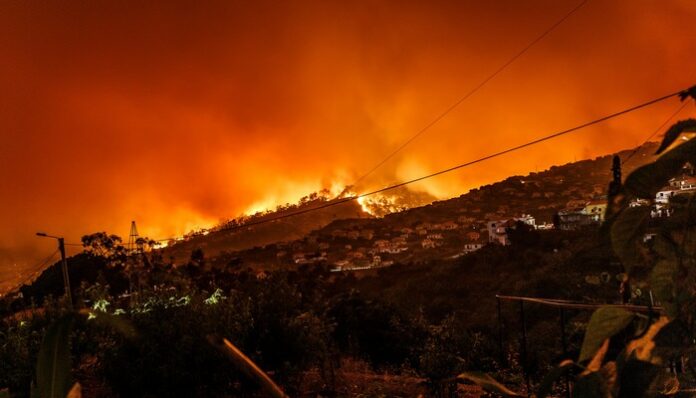
I live in Wisconsin, and a few times in the past few summers —most recently in early August —we’ve received air quality alerts, telling us to stay inside. The last time, it was because of Canadian wildfires. The smoke spread south, across the border into several Midwest states. It was a concern because the particles in this smoke are small enough to get inside people’s lungs, and (depending on a person’s health status and how much of it they inhale), can increase the likelihood of certain health problems, like asthma or heart disease.
When I spell out Wisconsin’s fire problem this way, it sounds dystopian.
However, when I first talked about the fires with my mom, she told me that although she never experienced wildfires when she was young, she’s used to them now. We agreed that, although thinking about the fires is scary, they’ve become such an inevitable part of summers here that we don’t think about them that often. It’s hard not to be complacent when natural disasters are just part of your life: the “new normal.”
It’s hard to keep two truths in my mind — that this is “normal,” in the sense that it happens every summer now, and that, in an environmental sense, it is not.
Wildfires are part of nature.
But air quality alerts caused by wildfires as far north as Canada didn’t happen when my mom was young. Research shows that the overall trend of more massive, more frequent fires in the summer relates to climate change. Rising global temperatures increase the frequency and intensity of natural disasters because, as the world gets hotter, the atmosphere absorbs more water vapor. This becomes fuel for storms, and also makes the ground drier, turning unexpected areas into the perfect kindling. And as this air pollution issue shows, damage to the Earth doesn’t often remain at ground zero. Forest fires disrupt surrounding ecosystems, threaten our food supply, contaminate the soil, water, and air, and increase the spread of disease, forcing animals to migrate.
From a geopolitical perspective, climate change has the potential to cause unprecedented mass migration and violent struggles over resources and exacerbate the longstanding inequalities between the global North and South.
Most people are still deeply misinformed about what climate change is and how it’ll impact us.
People still seem to paint climate change as a “fluffy” issue that only “bleeding-heart environmentalists” care about. The iconic image of a polar bear on drifting ice, though a good representation of climate change, does not do enough to show the world how rising temperatures affect human beings.
Although it’s hard, we need to look at our “new normal” and realize that we deserve more than rising temperatures and unsafe living conditions. If we continue to adjust what we perceive as “normal” and ignore the real issue, we’ll lock ourselves into an environment that’s too painful to thrive in and too constrictive to escape.
Featured Photo by Michael Held on Unsplash.



















extreme heat, drought, sea-level rise, and extreme weather degrade livelihoods (agriculture, fisheries, water supply). When livelihoods collapse, people migrate, sometimes across borders.
people playground is a great way to learn about physics and mechanics in a fun, chaotic environment.
Ich schreibe aus Stuttgart. Bei einem Treffen empfahl mir ein Kollege ein Mobilslot mit einfachem Interface; das sprach mich an, weil ich oft vom Handy spiele. Ich probierte verschiedene Modi und achtete auf die Bonusrunden. https://spinmama.com.de Die Freispiele kamen schließlich und verbesserten meinen Kontostand merklich; die Bedienung war intuitiv und die Auszahlung unkompliziert.