
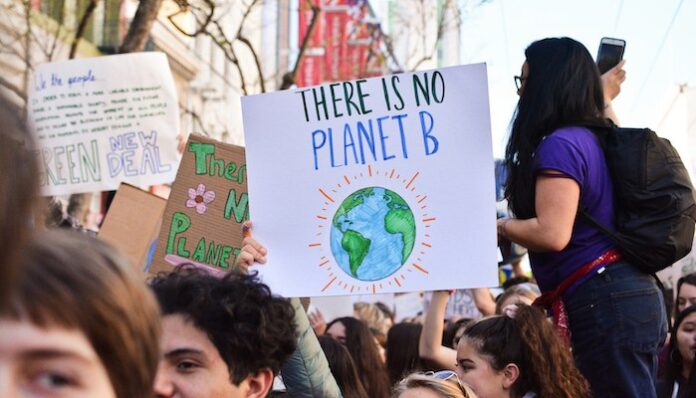
For years, we’ve framed environmental responsibility as an individual moral issue. We tell ordinary people to stop littering, reduce plastic use, conserve water, switch off lights, and feel personally responsible for climate change.
While individual behavior does matter, for-profit corporations are actually responsible for most of the environmental crisis we find ourselves in. Even a massive shift in individual behavior would not solve the problem unless we force corporate practices to fundamentally transform.
Pollution Is A Problem of Scale, Not Intent
It’s easy to blame a single person throwing a plastic bottle. But industrial production – not consumer carelessness – dominates global plastic pollution.
According to the United Nations, over 400 million tonnes of plastic are produced globally each year, and nearly 50% is designed for single-use. Most of this plastic is created by a small number of petrochemical corporations.
Individuals do not design this system. They merely consume what is made available.
Consumer Choice Doesn’t Exist
Corporations commonly defend themselves by insisting that they merely respond to consumer demand. This assumes consumers have genuine freedom of choice.
In reality, corporations shape demand through advertising, monopolies, pricing, and limited alternatives.
For decades:
- Automobile companies promoted private car ownership while lobbying against public transport.
- Fossil fuel companies funded climate denial campaigns.
- Fast fashion brands normalized disposable clothing cycles.
Consumers choose between options corporations already decided for them.
Blaming consumers for structural constraints is deflection, not accountability.
Corporatations Use Plastic Packaging Because It’s Cheap
Most plastic waste is not created because people love plastic. It exists because corporations choose cheap packaging over sustainable alternatives.
A 2018 study found that just 20 companies are responsible for over 55% of global single-use plastic waste. These include oil and packaging giants, not ordinary citizens.
We often presents recycling as the solution. But globally, only about 9% of plastic has ever been recycled. The rest ends up burned, buried, or dumped into ecosystems.
This is not a failure of individuals but design.
Environmental Damage Connects To Income Inequality
Environmental destruction closely follows wealth concentration.
According to Oxfam, the richest 1% of the global population produces more carbon emissions than the poorest 50% combined.
This top minority controls corporations, production systems, supply chains, and investment flows. They benefit most from industrial profits while externalizing environmental costs onto the rest of society.
Meanwhile, poorer populations face floods, droughts, heatwaves, food insecurity, and displacement despite contributing least to the problem.
Individual Responsibility Still Matters (But Differently)
This is not an argument for personal apathy.
Individual responsibility matters as collective political pressure, not personal guilt.
Personal action should lead to:
- Demanding corporate accountability
- Supporting environmental regulation
- Voting for sustainability-focused policies
- Exposing greenwashing
The question should not be, “Are you recycling enough?” but:
- Why are non-recyclable materials legal?
- Why do polluters not pay the full environmental cost?
- Why are sustainable alternatives not mandatory?
Would 50% Public Awareness Solve the Crisis?
Imagine a world where 50% of common people suddenly become environmentally conscious.
They stop littering, reduce plastic, and use and conserve electricity and water. People decide to carpool and recycle.
Pollution would decrease but, only marginally. Power plants would still burn fossil fuels. Factories would still dump waste. Mining would still destroy ecosystems. And supply chains would still prioritize profit over sustainability.
Individual action helps, but it cannot override industrial-scale pollution.
Redirect Blame to Power
The biggest environmental lie of our time is that ordinary people primarily cause our ecological collapse.
This lie protects powerful interests by fragmenting responsibility and exhausting citizens with guilt. While individual behavior matters, it cannot substitute for systemic accountability.
Real solutions require:
- Strict corporate regulation
- Mandatory clean technology adoption
- Transparent supply chains
- Environmental liability laws
- Redistribution of environmental costs
The planet does not need more guilty individuals. It needs accountable corporations and courageous governance.
Photo by Li-An Lim on Unsplash



















yes should be clean try to use recycle products just like cookout.
The main goal of the game Basketball Stars is straightforward: outscore your opponent before time runs out. However, winning takes more than simply shooting the ball, players must also learn to dribble, pass, block, and perform unique moves while responding swiftly to opposing movements.