It’s almost predictable now — another headline, another name, another man with influence falling into the same pattern of greed, lust, and moral collapse. Whenever I read about a new scandal, I don’t feel surprised anymore. Instead, I feel a strange calm, as if something that has always existed beneath the surface has simply been caught in the act again. Whether it’s a rapper, a CEO, or a politician, power seems to do the same thing: strip away restraint, not build it.
Recently, rapper Sean “Diddy” Combs was sentenced to more than four years in prison on prostitution-related charges. The reports described how he arranged interstate travel for escorts, held drug-fueled sex parties, and recorded encounters in hotel suites. It was grotesque, but almost cliché — the powerful man who thought he could outplay consequence.
In France, actor Gérard Depardieu was convicted of sexual assault for groping women during filming in 2021. Despite his fame, he received only a suspended sentence. And, in the UK, filmmaker Noel Clarke, once a symbol of success, was found guilty in a civil case after nearly 20 women accused him of harassment and assault. The court ruled their allegations “substantially true.”
Even the younger, edgier stars seem to fall into the same spiral. Multiple women – including those underage – have accused Jared Leto, an Oscar winner and rock musician, of sexual misconduct. In the U.S., the Alexander Brothers, real estate moguls in Miami, were charged with sex trafficking, rape, and drugging women they promised luxury to. And this doesn’t just not happen in the West. In India, a BJP leader was arrested for running a sextortion racket, using threats and influence to blackmail victims.
Every corner of the world has its reflection of the same story — a man who thought his status gave him permission to behave like a god.
If you look closer, it almost feels like a pattern of nature, not society. Give men wealth, and they don’t turn into saints; they show more of what they already were. Power doesn’t reform—it amplifies.
The façade of morality that ordinary men wear only exists because of limitations. Once the limits no longer exist, the truth shows itself.
People often argue, “Not all men,” or “There are good ones too,” and yes, there are. But if you look at the statistics, if you read through the endless court records, leaked videos, and testimonies, you’ll see that the ratio is terribly skewed. Out of a hundred powerful men, most are involved in some hidden form of exploitation, infidelity, or abuse. Even if we don’t know it publicly, it – buried under expensive suits, PR statements, and polished smiles.
Ironically, the richer they get, the emptier their lives appear. These men chase sensation because meaning has already escaped them. When you can buy everything, only corruption feels like a thrill. And when the world worships you, only sin feels like rebellion. These men don’t crave sex or drugs — they crave the proof that they can still feel something. But it never lasts. They end up hollow, surrounded by people they’ve paid to love them, haunted by things they thought they owned.
Yet, society still celebrates them.
We call them “legends,” “icons,” and “bosses.” We buy their music, perfumes, and luxury brands. All in all, we forget that, behind every empire, there’s always something rotting underneath. The fall of one man is never just his own—it mirrors an entire culture that rewards power, not purity.
Maybe this is why I’ve stopped romanticizing success. Every empire, every mansion, every million-dollar smile seems to carry a silent curse: the loss of self.
The pattern keeps repeating, and maybe it will never stop, because the flaw isn’t just in men — it exists in the structure that feeds them, praises them, excuses them.
Until we start questioning what kind of power we worship, we’ll keep watching the same story, over and over again.
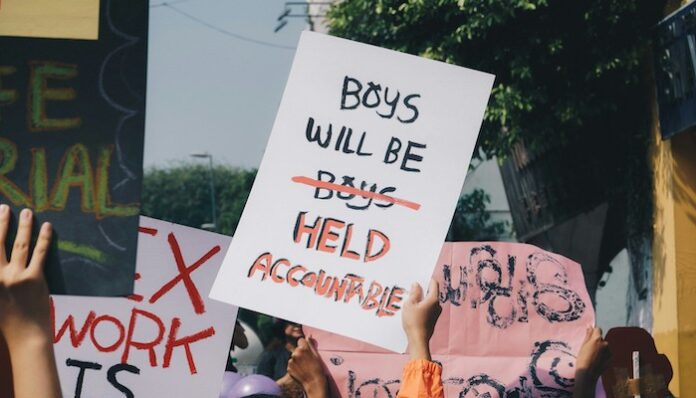
Photo by Michelle Ding on Unsplash