
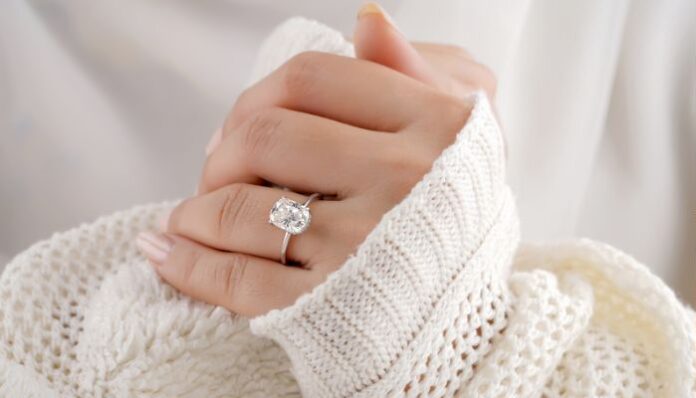
Three years ago, I was standing in a high-end jewelry store on Fifth Avenue, staring at a stunning engagement ring that cost more than my car. The salesperson was enthusiastically explaining the “four Cs” when I asked a simple question that changed everything: “Where exactly did this diamond come from?”
The uncomfortable pause that followed told me everything I needed to know. Despite the hefty price tag and prestigious brand, nobody could give me a straight answer about the stone’s journey from mine to store. That moment sparked my deep dive into the jewelry industry—and what I discovered fundamentally changed how I think about luxury, ethics, and what real value means in 2025.
The Uncomfortable Truth About Traditional Mining
Let me share some numbers that will make you rethink that sparkling stone on your finger. Traditional diamond mining requires moving approximately 250 tons of earth to extract just one carat of rough diamond. To put that in perspective, that’s equivalent to excavating a small building’s foundation just to find a stone the size of a paperclip.
The environmental impact is staggering. Mining operations consume roughly 480 liters of water per carat, destroy entire ecosystems, and leave behind massive craters that scar landscapes for generations. I’ve seen aerial photos of diamond mines in Africa and Canada—they look like wounds in the earth that never heal.
But the environmental cost is just one part of the story. The human cost has been documented extensively, from unsafe working conditions to the persistence of conflict diamonds despite certification programs. Even with the Kimberley Process in place, experts estimate that billions of dollars worth of conflict diamonds still enter the legitimate market annually.
As someone who values transparency in everything from my food sourcing to my investment portfolio, I couldn’t reconcile spending thousands of dollars on something with such an opaque and problematic supply chain.
The Lab-Grown Revolution That Changed Everything
That’s when I discovered lab-created gems. Initially, I was skeptical—weren’t these just “fake” diamonds? This misconception is exactly what the traditional diamond industry wants you to believe, but the reality is far more fascinating.
Lab-created diamonds are chemically, physically, and optically identical to mined diamonds. They’re not “synthetic” or “artificial”—they’re real diamonds, grown in controlled laboratory environments using the same carbon structures found in nature. The only difference is the timeline: instead of forming over billions of years deep in the earth, they’re created in weeks using advanced technology.
When comparing lab-created gems vs natural stones, the quality differences often favor the lab-grown options. Because the growing process is controlled, lab diamonds frequently exhibit superior clarity and color consistency than their mined counterparts. You’re getting a better product while making a more ethical choice.
Innovation Meets Ethics
The technology behind lab-grown diamonds reads like science fiction. Chemical Vapor Deposition (CVD) grows diamonds atom by atom in specialized chambers, while High Pressure High Temperature (HPHT) recreates the extreme conditions found 100 miles beneath the earth’s surface. Both processes produce diamonds that often exceed the quality of the finest mined stones.
What excites me most is the sustainability aspect. Lab-grown diamond production uses 85% less water per carat and generates a fraction of the carbon emissions. Many facilities now operate on renewable energy, making their environmental footprint nearly negligible compared to traditional mining.
Companies like LabRilliante are leading this transformation, combining cutting-edge production technology with complete supply chain transparency. When I can trace my jewelry from laboratory to setting, I know exactly what I’m supporting with my purchase.
The Price Point That Makes Sense
Here’s where lab-grown diamonds get really interesting from a value perspective. They typically cost 30-50% less than comparable mined stones while offering equal or superior quality. This isn’t a budget compromise—it’s smart spending.
For millennials facing student loans, housing costs, and economic uncertainty, this value proposition is compelling. Instead of spending $8,000 on a one-carat mined diamond, you could get a larger, higher-quality lab-grown stone for $4,000 and put the savings toward a down payment, travel, or investments.
The luxury isn’t diminished—if anything, it’s enhanced by the knowledge that your purchase aligns with your values.
Making the Switch: My Personal Experience
I eventually bought a lab-grown diamond engagement ring, and the experience was revelatory. The stone was flawless, the documentation complete, and the price allowed us to invest in other priorities. Three years later, friends still comment on its beauty, and I feel proud rather than conflicted about wearing it.
The best part? I can tell anyone who asks exactly where my diamond came from, how it was made, and why I chose it. There’s something powerfully luxurious about that level of transparency and intentionality.
The Future Is Already Here
The jewelry industry is experiencing its most significant transformation in decades. Major brands are introducing lab-grown collections, and consumer acceptance is accelerating rapidly. Lab-grown diamond sales have grown over 200% in the past three years, driven largely by millennials and Gen Z consumers who prioritize ethical consumption.
This isn’t a trend—it’s a fundamental shift toward more conscious luxury. We’re the generation that researches everything from the origins of our coffee to the labor practices of our clothing brands. Why would we accept less transparency from a purchase as significant as fine jewelry?
My Advice: Choose Consciously
If you’re considering fine jewelry, I encourage you to ask the hard questions. Demand transparency about sourcing, investigate the environmental and social impact, and consider whether traditional methods align with your values.
Lab-grown diamonds offer identical beauty and durability while eliminating ethical concerns and environmental damage. They represent luxury evolved for the conscious consumer—and in my experience, that makes them far more valuable than anything pulled from the ground.
Feature image from Canva.


















I’ve noticed more shoppers, including myself, are choosing lab-grown diamonds for their ethical and sustainable vintage 80s clothing appeal. They offer the same brilliance and quality as mined diamonds but without the environmental impact. It feels empowering to invest in beautiful jewelry while supporting responsible practices and reducing the carbon footprint.
I appreciate the effort Monark puts into design. Their men jackets bring elegance, comfort, and durability together, making them the right choice for stylish men.
The biggest advantage of the SpinBetter app, which I downloaded from https://spinbeter.com/app/ is payments. No need to switch between apps. I top up my account via bKash (or UPI/Nagad) right in the app. It takes 30 seconds. Everything is perfectly optimized. I also make withdrawals there. It’s the easiest and fastest way to manage money on the platform.
This article brilliantly captures why the solitaire endures: it’s a statement of confidence where simplicity amplifies beauty and meaning. This philosophy of ‘less is more’ resonates far beyond jewelry. In our cluttered digital world, I appreciate it in services that prioritize a clean, focused experience over overwhelming choice. For instance, in online entertainment, a platform that curates quality and offers transparent terms feels more intentional and trustworthy. This commitment to a clear, uncluttered core experience is something I value, whether in a timeless ring or a streamlined service like playmojo online casino where the focus is on delivering a solid, straightforward gaming environment without unnecessary complexity.
This shows that consumers are becoming more conscious and demanding, and this principle applies to all areas, from jewelry to technology. I also chose the https://winwin-gh.com/ I would use very carefully and settled on this one. I liked that it works stably, without lag or long loading times. Everything is here at once, slots, online casinos, and betting—it’s very convenient. You can deposit funds in any way, as well as withdraw them. Thank you for such an insightful look into the future of the jewelry industry!