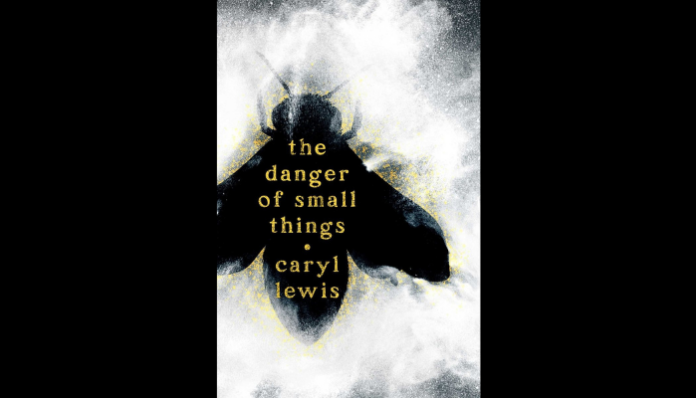
The young adult dystopian genre, popular in 2010, seems to be making a comeback, much to my delight. One of the recent entries in this genre is “The Danger of Small Things.”
Written by Caryl Lewis, “The Danger of Small Things” takes place in the future, where climate change has led to the last honeybee dying off. The government now takes girls from their homes and forces them to pollinate crops by hand with brushes, as well as marry and have children to keep the population growing.
Jess, having grown up with a rebellious mother who taught her about the world before, knows that people should use brushes to draw art, one of the many things banned in this new world. Despite the oppressive world she lives in, she believes something as seemingly simple as art can spark a revolution.
Like other dystopian novels, “The Danger of Small Things” touches on several important issues.
This includes climate change, sexism, and rebellion. These are all interesting ideas to explore, though the book’s handling of it works in some places and leaves much to be desired in others.
One glaring issue is that the novel throws out some arbitrary issues that have popped up in this future but never really explore how they happen. We also don’t know how these issues connect to the loss of honeybees. The food scarcity and humans having to take up pollination does make sense, as bees do contribute to our food ecosystem. However, how did that lead to wars? Were they over food shortages? The book never explicitly connects these issues or shows the correlation, which feels like a missed opportunity.
The novel also doesn’t explain why the government banned art.
Jess’ artwork serves as a catalyst for sparking a revolution. However, we never know why the government banned art in the first place. Yes, many artists have used art as an act of resistance, but there’s no clear connection between the government banning artwork and its connection to the fallout of the climate disaster that the novel takes place in.
“The Danger of Small Things” also missed an opportunity to talk more about climate change and how humans destroyed the environment. The novel could have explored climate change in more detail rather than try to tackle multiple issues it never fully fleshes out. That would have made the dystopian world feel more believable and developed.
As far as characters go, Jess falls a little flat as a protagonist. She feels more like an archetype for the spunky teen who fights against a corrupt system than a fully developed character. At the very least, Jess does have fear about repercussions for her actions, though it’s debatable how effectively these fears come across.
With that being said, this is not a bad book.
While I would have appreciated more thoughtful world building and character development, but I enjoyed it for the message it conveyed.
I don’t see art as a form of resistance in many dystopian novels, and I love how the book explored that here. Art appears simply but is nevertheless a powerful tool that makes people feel. In the age of generative AI and overlooked, human-made art, the message of art’s importance rings especially powerful here.
The novel also does explore the themes in an interesting and timely way, even if it needed more development. “The Danger of Small Things” smartly avoids the trap of telling us how dangerous the government is and actually shows it when we see the cruel punishments dealt out to those who rebel. This adds a sense of urgency and danger as you read.
“The Danger of Small Things” doesn’t stand out like “The Hunger Games.” However, it does tackle important issues in some ways that work. It also talks about these issues in an accessible way. It shows how something as simple yet powerful as art can pave the way for hope and change.
“The Danger of Small Things” released on March 24, 2026. You can buy it online and in bookstores today.
Featured image via Simon & Schuster