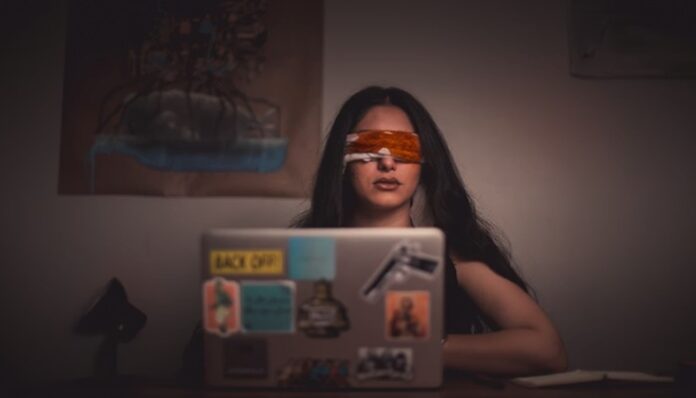
In the past few years, AI has grown so rapidly that we can no longer tell whether what we’re seeing is real or fake. It’s honestly frightening, especially with the current climate, because false information spreads to more people, and they’re often convinced it’s the truth when it isn’t.
Full transparency: I am a writer, and I use it all the time. I use Grammarly to help me edit my work. I love that I can rely on this tool to edit my own work when no one else is available to help, which is why I started using it in the first place—not to have it write my pieces for me.
Nowadays, it is used to create fake music artists and even videos featuring dead celebrities. It’s also making fake actresses and fake political ads that seem real, which people find horrifying, to say the least.
Just last week, I came across a song I liked. I thought my aide would enjoy it, so I told her about it, and she was like, “Oh yeah, it’s AI.” I couldn’t believe it. It was so good, and it sounded so real that I was shocked that it wasn’t.
In my view, the most troubling aspect of AI is its deep integration into our daily lives, work, and society.
As Artificial Intelligence (AI) quickly reshapes the U.S. job market, it sparks widespread debates and concerns about job displacement, with discussions focusing on how many jobs AI might replace. This statistical summary presents the latest data and trends on AI-driven job loss and the broader effects of artificial intelligence on employment.
The entertainment industry and creative professionals are not immune to this, as this video shows. As a freelance non-fiction inspirational writer, I worry that people might begin to doubt whether I wrote something or if AI did.
It’s already happening, and unfortunately, there’s no stopping it. AI is here to stay; we must accept that. But stricter regulations are also needed regarding this powerful tool.
Founded in 1975, the National Conference of State Legislatures recently provided a summary of legislation across various states, which I appreciate as a step in the right direction. Globally, this issue has been tackled by implementing more safeguards.
While the EU is considering delaying parts of its AI Act, other countries are moving forward with efforts to pass new AI laws.
For example, South Korea finalized its AI Framework Act in January 2025, which enhances transparency and safety standards and includes various promotional measures, such as support for research and development, adoption, and workforce training.
Similarly, Japan passed the AI Promotion Act in May 2025, a lightweight regulation that promotes collaboration between companies and government safety efforts, while allowing the government to publicly identify companies that use AI to infringe on human rights. Additionally, China introduced its AI Labeling Rules, which typically require service providers, per China’s current AI regulations, to attach both explicit and implicit labels to AI-generated content.
Look, I am not saying AI is all bad; it’s not. But the way we currently use it—to mislead and trick each other online—is not what it was intended for. It was created as a tool to help society progress, not to harm it.
So if you use it, please do so responsibly and treat it as a tool, not a toy that tricks and confuses people. Just because we can doesn’t mean we always should or need to. We are smarter than this, at least I hope we are.
Featured image via Ardalan Hamedani on Unsplash