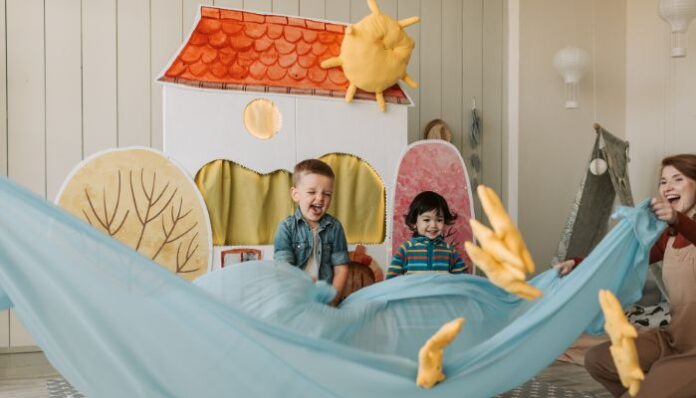
What makes a playroom truly special? What actually makes a playroom magical? Is it the toys? The colors. The endless laughter echoing down the hallway?
When I first stood in that empty spare room, staring at blank walls and cold flooring, I asked myself this exact question. I didn’t want just another room filled with plastic. I wanted a space that feels alive. A place where imagination stretches wide and little feet run freely without worry.
Designing my kids’ playroom wasn’t about trends or Pinterest-perfect corners. It was personal. I kept thinking about my own childhood, the corners I hid in with books, the messy craft tables, the forts made from couch cushions. Those memories weren’t about fancy furniture. They were about how the room made me feel. Safe. Free. Creative.
So, every accessory had to serve a purpose. Not just sit there looking pretty. It had to protect. Inspire. Organize. Comfort. And sometimes, it just had to make my kids smile for no reason at all.
1. Soft Flooring: Comfort and Safety First
The first thing I noticed about the room was the floor. Hard. Cold. Unforgiving. Kids fall. They jump without looking. They spin until they crash. So I knew the flooring had to change.
I added thick cushioned mats and a large soft rug that covers most of the play area. The difference was immediate—softer footsteps. Quieter afternoons. Fewer tears after tumbles. And honestly, it made the room feel warmer in an instant.
There’s something comforting about sitting on the floor with them now and building towers and lying on our backs, watching imaginary clouds on the ceiling. The mats are easy to clean, too, which is important because spills happen. Always. Safety first. Always. But comfort matters as much.
2. Organized Storage: Encouraging Independence
Let’s talk about toys. They multiply. Overnight. I swear. At first, everything was in piles. Blocks mixed with puzzles. Dolls hiding under cars. It felt chaotic. And when a room feels chaotic, kids get overwhelmed. I saw it happening.
So, I chose open shelves at their height. Bins with labels, some words, some pictures. Simple. Clear. It’s amazing what happens when children can see their choices clearly. They play longer. They focus better. They even clean up (sometimes).
One afternoon, my youngest carefully sorted crayons back into their bin without being asked. I just stood there watching—small victory. Huge impact. Organization doesn’t have to be strict. But it needs to exist.
3. A Reading Nook: Cultivating a Love for Books
I’ve always believed books deserve their own little world and not crammed in a corner, and not stacked randomly. So, I created a reading nook. A soft rug. Floor cushions. A small shelf displaying books face-forward so the covers show. I even added a light canopy overhead. It feels like a secret hideaway.
Sometimes I find them there whisper-reading to each other. Sometimes they flip pages quietly. That corner changed the energy of the room. It’s calmer. Softer. It’s funny how one cozy spot can turn reading from “something we should do” into “something we want to do.”
4. Creative Stations: Supporting Imagination
There’s glitter in places I still can’t find. And I’m okay with that. The creative station was non-negotiable. A small sturdy table. Washable paints. Crayons are sorted neatly. Paper stacked and ready. I even painted one wall with chalkboard paint. Best decision ever.
They draw castles. Write silly math problems. Practice spelling. Sometimes it’s messy. Actually, it’s often messy. But it’s their mess. Their ideas splashed across a wall. Creativity needs permission. This station says yes without words.
5. Comfortable Seating for Social Play
Kids don’t just play alone. They gather. They plan. They giggle loudly. So, I added lightweight floor cushions and a small modular sofa that can be moved around easily. Some days it’s a pirate ship. Other days it’s a classroom. Yesterday, it was apparently a rocket headed to Mars.
I avoided heavy furniture on purpose. I want the room to shift with their imagination. To move when they move. Flexibility makes a room feel alive.
6. Functional Entry Space: Keeping the Room Clean
This one is practical. Not glamorous. But necessary. Right outside the playroom door, I placed sturdy entrance mats to catch dirt from little sneakers. Inside, just past the doorway, soft indoor mats help trap whatever sneaks through because kids spend most of their time on the floor. Crawling. Rolling. Playing.
It sounds small. But keeping the space clean means fewer worries. And less vacuuming for me. Sometimes the simplest accessories are the most important.
7. Sensory Accessories: Engaging the Senses
Children learn through touch. Through sound. Through movement. I added textured pillows. A small sensory bin with sand and scoops. Soft string lights that glow gently in the evenings. A basket of tiny musical instruments, tambourines, maracas, things that make joyful noise.
But balance matters. Too much stimulation can overwhelm. So, I kept it intentional. Thoughtful. Watching them explore textures with serious concentration reminds me how new the world still is for them.
8. Wall Decor That Inspires
Bare walls felt empty. So, we filled them with meaning. A growth chart stands tall near the door. We mark it every few months. A world map hangs above the reading nook. They point at places and ask questions I don’t always know how to answer.
And their artwork? Framed and hung proudly. It’s not about perfection. It’s about pride. When they see their drawings displayed like masterpieces, their confidence grows. Quietly. Steadily.
9. Lighting: Setting the Mood
Lighting changes everything. Bright overhead lights felt too harsh. So, I layered it. Soft LED string lights. A dimmable ceiling fixture. A small lamp near the reading nook.
During craft time, we turn the lights up. During story time, we dim them low. The room transforms. It feels magical sometimes. Calm. Light isn’t just practical. It shapes emotions.
10. Rotational Toy Displays: Reducing Clutter
Here’s a truth I learned quickly: more toys don’t equal more joy. In fact, too many choices can freeze kids. They bounce from one thing to another. Nothing holds their attention.
So, I rotate toys. Some stay out. Others rest in storage bins and return weeks later like brand new treasures. The excitement when an “old” toy reappears is incredible. Less clutter. More focus. Better play.
11. Flexible Space for Growth
Children change fast. One year, it’s dinosaurs—the next it’s space rockets. So, I avoided overly themed furniture. I chose neutral shelves. Adjustable storage. A table that works for toddlers and older kids alike.
I didn’t want to redesign the entire room every year. That’s exhausting. And expensive. Flexibility keeps the space relevant as they grow.
12. Creating Zones for Better Play Flow
At first, everything blended. Loud play mixed with quiet reading. It didn’t work. So, I created zones. Active play on one side. Creative station near the window. Reading nook tucked in a corner. Storage along one wall.
Clear zones reduce chaos. Kids naturally understand where certain activities belong. It feels organized without being a strict structure, but still has freedom.
13. Safety Accessories: Peace of Mind
Safety details aren’t exciting to talk about. But they matter—corner protectors on sharp edges. Shelves anchored to the wall. Non-slip pads under rugs. Cords neatly secured.
These small, invisible choices let me relax a little more. And when I’m relaxed, they feel it too. Peace of mind is priceless.
14. Personal Touches That Make It Theirs
The final layer wasn’t about design. It was about identity. We added their names above their cubbies. Hang family photos at their eye level. Created a small memory board for ticket stubs and drawings. This room belongs to them. Completely.
Sometimes I sit quietly at the doorway and watch. The forts. The laughter. The serious little faces focused on building something important. And I realize, it was never about the accessories alone. It was about creating a space where they feel seen. Safe. Inspired.
Conclusion
Looking back, choosing these accessories wasn’t random. Every mat. Every shelf. Every light. They all tell a story. A playroom isn’t just four walls filled with toys. It’s a childhood laboratory. A stage. A quiet corner for big feelings. And sometimes, it’s just a soft place to land after a long day.
Would the room function without all these thoughtful additions? Probably. But it wouldn’t feel the same. It wouldn’t invite creativity the way it does now. It wouldn’t whisper, “Go ahead. Imagine something bigger.”
In the end, I didn’t design a perfect playroom. I designed a living space that grows with my children. A place that changes. Evolves. Gets messy. Gets cleaned again. And that, I think, is what truly makes it special.
Feature image from Canva.