
Since the Trump administration and alt right have gained more traction, more and more people have come against diversity, equity, and inclusion – often abbreviated as DEI. Look anywhere online, and you see people complaining, mocking, and belittling DEI initiatives. Many companies have rolled back their DEI programs, and colleges have done the same.
Overall, DEI gets a bad reputation. Too often, people portray it like a contentious issue.
But it shouldn’t be.
DEI is not a buzzword. It is not “forced diversity” or “wokeness.” Instead, it is something that we all need.
DEI’s first letter, diversity, acknowledges that we don’t live in a monolithic world. We don’t have a monolithic group of people. We have people of various backgrounds living here, which includes race, ethnicity, gender, sexuality, and other identities. Whether you like it or not, we live in a world where people come from all different kinds of backgrounds. Not only is it bigoted to complain about people being different, but it also ignores reality.
You can’t erase us just because you don’t like us.
The second letter in DEI, equity, recognizes historical and current oppression and how it affects us today. It is not the same as equality. While both are important, equity takes into account past injustices done against several groups of people. Think of chattel slavery and police brutality, conversion therapy and sodomy laws, and other laws that only applied to certain groups of people. Ideally, we would treat everyone equally, but that’s not reality.
Equity acknowledges that some people have an advantage over others and takes that into consideration. By focusing on barriers that some people face and others don’t equity, focuses on creating equal footing. Only then can we truly reach equality.
And the last letter in DEI, inclusion, is something everyone can relate to.
As the name implies, inclusion helps people feel included. It’s one thing to say you have a lot of queer people at your workplace. But do they feel included? Do they feel like they are a part of the group, that they can be themselves without being othered or shunned?
Think of inclusion like cliques in high school. Sure, you all go to the same school, but do you get to hang out with the popular kids? Do you get treated like everyone else, have your opinions respected, and given the inherent dignity and respect that all humans deserve?
While this is a simplified take on inclusion, the idea isn’t as complicated as it may look. Everyone wants to be included. We want to feel welcomed when we walk into a room, or show up in any aspect of life. And inclusion ensures that everyone gets that.
That’s why all three—diversity, equity, and inclusion—are so important.
I highly suspect the importance of DEI has led to the current administration and likeminded individuals to push back against it. DEI has helped people reach leadership positions by working to eliminate barriers, brought together couples from different backgrounds, and overall makes for a more equal society. And if you live with a zero sum game mindset, an evening of the plane field threatens you.
But DEI shouldn’t be a contentious issue. It shouldn’t be an issue at all. Like with all identity politics, no one can help who they are. I didn’t ask to be Black, bisexual, or female. And no one else asks to be a part of a group that we have historically and continually shun. Our existence is not a debate, and you shouldn’t treat us like partisan issues.
At the end of the day, DEI helps acknowledge that we are all people. And that is something I’ll always support.
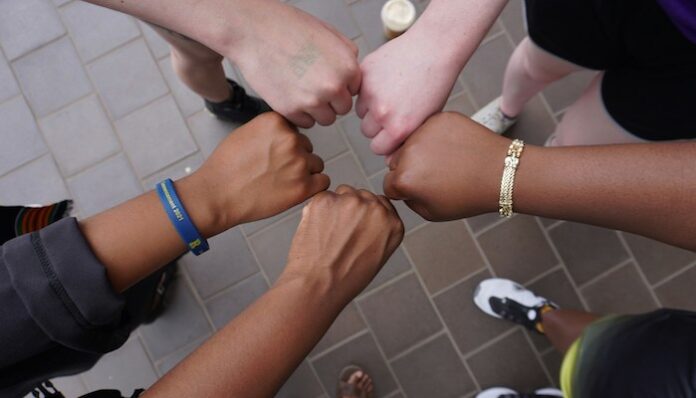
Photo by Zacqueline Baldwin on Unsplash



















Thank you for such thoughtful content. I really appreciate each and every word of it.