
There are times when I genuinely like a song. The rhythm works. The beat is intelligent. The production feels deliberate. The voice carries confidence.
For a moment, I admire the craft.
And then the lyrics turn casual. Women are reduced to insults. Sexual humiliation is used as shorthand for dominance. Degradation slips in so effortlessly that it feels expected.
That is usually the moment my admiration collapses. Not because I am shocked, but because I am disappointed.
Misogyny as an Aesthetic Choice, Not an Accident
This pattern is neither subtle nor new. It has been openly analyzed in global cultural criticism for decades. Western rap, in particular, has often been scrutinized for endorsing misogynistic language, with artists like Eminem, Chris Brown, and Kanye West frequently mentioned in scholarly and media discussions for lyrics that depict women as expendable, manipulative, or mainly sexual beings (Adams & Fuller, 2006; Weitzer & Kubrin, 2009).
Importantly, these studies do not claim that every rapper is personally misogynistic. Instead, they suggest misogyny functions as a normalized stylistic device—a creative shortcut rather than a necessity.
This distinction matters.
Misogyny in music is not always ideological. Often, it is aesthetic.
When Technical Brilliance Coexists With Harmful Narratives
Some of the most technically skilled artists in Western rap history are also the most frequently cited in debates about lyrical misogyny.
Eminem, for example, is widely acknowledged for his unparalleled wordplay, internal rhyme schemes, and narrative control. At the same time, his work has been extensively critiqued in cultural commentary and media ethics discussions for repeatedly depicting women as victims of violence, humiliation, or contempt (BBC Culture; The Guardian).
The debate surrounding Eminem’s legacy highlights an uncomfortable truth: “Technical excellence does not neutralize narrative impact.” Skill and harm can coexist.
Why “It’s Just Lyrics” Is a Weak Defense
A common defense offered by fans and artists alike is that lyrics are fictional, exaggerated, or merely harmless entertainment.
However, media psychology research consistently shows that repeated exposure to certain narratives shapes social norms, particularly when these narratives are presented by respected figures (Bandura, 2001).
This influence does not require listeners to agree with the message consciously. It operates through repetition, tone, and emotional association.
According to the American Psychological Association’s Task Force on the Sexualization of Girls (2007), repeatedly seeing women portrayed in sexualized ways in media can lead to feelings of desensitization toward disrespect, limited views of female worth, and the normalization of aggressive masculinity. Music often becomes a space where these attitudes are rehearsed, rather than a reflection of facts.
The Audience That Absorbs the Most
This issue becomes especially relevant when considering who consumes this music most intensely.
Teenage boys and young men make up a significant portion of the rap audience. Developmental psychology shows that adolescence is a period when identity, masculinity, and social behavior are heavily shaped by cultural models (APA, 2007).
When degradation is constantly linked with confidence, success, and admiration, it subtly transforms disrespect into a sign of strength. Not on purpose, but it works nonetheless.
Proof That Degradation Is Not Essential to Depth
The idea that rap requires misogyny to remain authentic or powerful collapses when confronted with counterexamples.
Artists like Kendrick Lamar are often highlighted in academic and literary analyses for exploring themes such as rage, power, trauma, masculinity, and social collapse without resorting to the degradation of women (Bradley, 2017). His work is studied at universities, cited in sociological research, and examined in ethical debates on contemporary masculinity.
This demonstrates a crucial point: “Intensity does not require humiliation.”
A Pattern Beyond Music: Comedy and Shock Culture
A similar trend is seen in Western stand-up comedy. Critics from outlets like The New York Times and The Atlantic often question why some comedians rely heavily on sexual vulgarity and misogyny for humor.
This criticism isn’t about suppressing offense, but about lack of creativity: when shock value overtakes understanding, degradation replaces wit.
This Is Not a Call for Censorship
This essay doesn’t argue for silencing artists or for moral policing of art. Instead, it calls for discernment. Freedom of expression doesn’t guarantee that all expressions are meaningful. Popularity doesn’t turn habit into truth. And talent doesn’t remove responsibility.
Listeners are allowed to say:
- “I admire your skill.”
- “I respect your craft.”
- “But I reject your contempt.”
What Real Rebellion Might Look Like Now
Misogyny in rap no longer surprises; it has become familiar, predictable, and nearly lazy. Today, true rebellion may lie in rejecting provocation and choosing imagination instead—refusing to degrade when easy to do so.
Refusing to lower standards even when it’s easy to do so. Having the courage to build intensity without contempt. Exercising discipline to prioritize depth instead of opting for superficial reactions.
When talent starts relying on degradation, it stops being radical. It becomes routine.
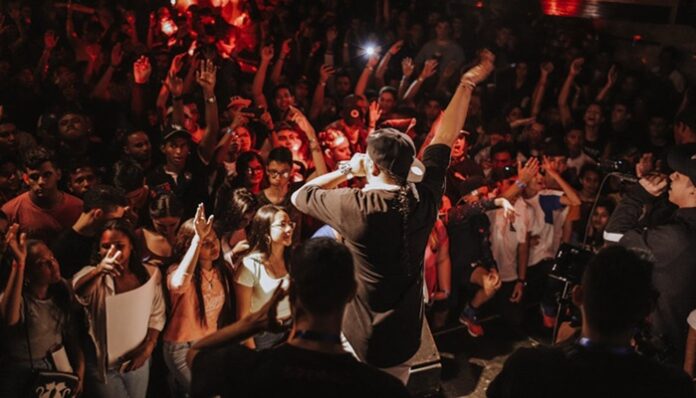
Featured image via Luis Quintero on Pexels



















Great piece—this really captures the raw emotion and creative frustration behind the process. Moments like these highlight why artists need spaces that respect authenticity and experimentation. An INDEPENDENT MUSIC PLATFORM plays a crucial role in giving creators the freedom to pause, evolve, and share their true voice without pressure. Honest stories like this remind us that creative blocks are part of the journey, not the end of it.