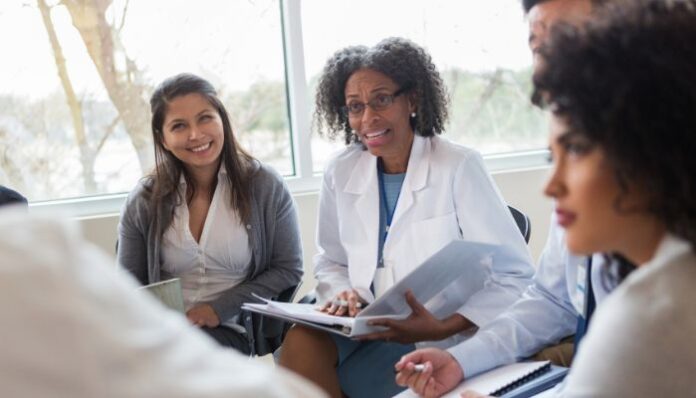
Have you noticed how often hospitals say they are short-staffed? I see longer wait times, nurses stretched thin, and clinics trying to manage more patients with fewer hands. As the population ages and care grows more complex, the demand for trained workers keeps climbing. Here, I want to explain how specialized programs support healthcare workforce needs and why their role feels more urgent than ever.
Meeting Demand in a Changing Healthcare System
When I look at the current healthcare system in the United States, I see steady pressure from multiple sides. An aging population means more people living with chronic conditions that require ongoing monitoring and support. Rural communities continue to face provider shortages, forcing patients to travel long distances for basic care. Public health emergencies, including the recent pandemic, exposed staffing gaps that had existed for years but were easier to ignore during calmer times. At the same time, medical technology keeps advancing, creating roles that did not exist ten years ago.
I do not believe hospitals can rely only on traditional four-year degrees to fill every role. They need a wide range of professionals, from nurses and technicians to medical assistants and health information specialists, who can step into positions with practical skills. This is where specialized programs become central to the conversation.
These training pathways focus on clearly defined competencies that match workforce needs. Rather than covering broad theory alone, they emphasize hands-on practice, supervised clinical hours, and real-world scenarios. I see how this structure allows graduates to enter the workforce with confidence and clarity about their responsibilities.
For instance, schools for medical assisting prepare students to manage both clinical and administrative tasks in outpatient settings. Graduates learn to take vital signs, assist with basic procedures, maintain patient records, and schedule appointments efficiently. Because the curriculum centers on practical skill development, clinics can bring these graduates on board with minimal adjustment time. In a healthcare environment where efficiency directly affects patient access, this type of preparation reduces onboarding strain and helps ease staffing gaps.
Another reason I view these programs as important is accessibility. Many last less than two years, which appeals to adults changing careers or recent high school graduates seeking a faster route into stable employment. With tuition costs rising across the country, shorter, career-focused options provide a realistic path for many individuals who might otherwise feel priced out of healthcare education.
Supporting Career Mobility
Another strength I recognize in specialized programs is their role as entry points rather than final destinations. A person might begin as a medical assistant, gain hands-on experience, and later pursue advanced credentials in nursing or healthcare administration. The initial training offers immediate employment and income while also clarifying long-term goals.
Stackable credentials make this progression possible. Certificates can lead to associate degrees, which can then transfer toward bachelor’s programs. I find this layered approach practical because it allows individuals to continue working while advancing academically. Instead of stepping away from the workforce entirely, they build upon existing qualifications.
Healthcare organizations often encourage this growth. Some provide tuition reimbursement for employees who pursue additional education. By partnering with training institutions, they create internal pipelines for advancement. From my perspective, this reduces turnover and strengthens institutional knowledge, since employees grow within the system rather than leaving it.
Career mobility also supports the broader healthcare structure. When entry-level roles are filled by well-trained professionals, experienced clinicians and administrators can focus on complex responsibilities. This balanced distribution of tasks improves efficiency and reduces burnout among senior staff.
Preparing for Future Challenges
Looking ahead, I do not expect the healthcare system to face fewer challenges. Climate-related disasters, emerging infectious diseases, and demographic shifts will continue to test capacity.
Specialized programs contribute flexibility to this equation. By designing curricula that emphasize adaptability, communication, and teamwork, institutions prepare graduates to function effectively in uncertain conditions. I see how training that encourages critical thinking helps workers adjust when protocols change or patient volumes surge unexpectedly.
Technology will also shape the future of healthcare staffing. Digital record systems, telehealth platforms, and diagnostic tools powered by artificial intelligence are becoming standard. Specialized training that includes digital literacy and system navigation prepares workers to operate confidently in tech-driven environments.
Yet even as technology advances, I remain convinced that human connection stays at the center of care. Machines can assist with diagnostics and scheduling, but they cannot replace compassion, patience, and clear communication.
Feature image from Canva.