
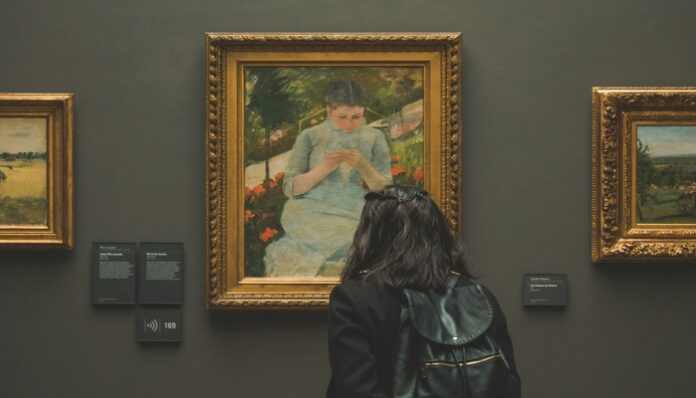
I recently visited the Boston Museum of Fine Arts — my first visit to an art museum in several years. Although I took my time exploring the exhibits from top to bottom and taking in the museum’s impressive collection of paintings, sculptures, and ceramics, I left that evening certain that I had still missed entire exhibits of work. I quickly realized that visiting an entire art museum in a single visit is nearly impossible, so I decided to return later in the year.
But given the size of the museum, it’s no wonder that I couldn’t see all of its works. The Boston Museum of Fine Arts houses nearly half a million works of art within its sweeping premises, each piece documented and preserved with care. As with the thousands of other art museums in the United States, the institution celebrates human creation and history.
When I left the museum, I felt my admiration for fine art — from painting to sculpting to sketching — grow tenfold.
But what I hadn’t realized over the past few years is that the online landscape made me feel jaded about art.
With the increasing use of artificial intelligence (AI), the field of art has lost some of its authenticity. Every day, I find artists on the internet who use generative AI to create drawings but pass the art off as their own. I see AI-generated artwork in video games and on restaurant flyers, physical merchandise, and book covers. Even more horrifyingly, I’ve most likely seen AI-generated artwork in even more places and not realized it — that’s how advanced AI is now.
But while AI art can sometimes look passable and can occasionally even trick seasoned artists, it’s all a hollow imitation of human creativity. The fact is that feeding prompts into a computer and watching a bot spit out images isn’t the same as being an artist.
People who support generative AI often cite how quick and easy it is.
Sure, a real oil painting can take hundreds of hours to create, but knowing that a real human placed every stroke with a specific story in mind is what makes works like Leonardo DaVinci’s iconic “Mona Lisa” so memorable. Mona Lisa was a real woman with a real story. The stories behind her smile make the portrait iconic, and AI can never replace art that tells a story. Art should be a labor of love. Its process and story are as much a part of the artwork as the art piece itself.
My recent visit to the Boston Museum of Fine Arts helped me realize that art museums are now more important than ever. Celebrating the rich history of human-created artwork is essential in a world that’s becoming increasingly inundated with soulless, machine-created slop. So whenever you have the chance, go visit your local art museum. You’ll appreciate the heights that human creativity can reach.
Featured Photo by Diane Picchiottino on Unsplash.


















What a beautifully insightful piece! I remember my first visit to an art museum; it opened my eyes to the depths of human creativity, much like your experience. Engaging with art always inspires me to think outside the box—similar to how games like speed stars challenge our imagination. Thank you for sharing!