For years, I treated my tired eyes as the inevitable cost of my modern lifestyle—the tax I paid for a career and social life that exist entirely inside screens. My daily routine was a relentless loop of laptop work, phone scrolling, texting, and watching videos before bed. Whenever my eyes felt dry or heavy, I simply blamed the monitor glare.
However, I eventually realized that recurring discomfort is not something to dismiss. Jonathan M. Frantz, MD, FACS, from Frantz EyeCare, notes that while screen-related discomfort is common, persistent symptoms require attention because they frequently overlap with dry eye, prescription changes, or other underlying eye health concerns. I learned the hard way that I should not wait until discomfort begins to interfere with my school, work, driving, or daily routines before searching for an eye doctor in Punta Gorda. Just because my screen strain was common did not mean I should have ignored it.
How I Easily Blamed My Screens for My Discomfort
Like most people, I always reached for the easiest explanation first. I told myself my eyes were tired simply because I had stared at my laptop for too long, my headaches were due to missed breaks, and my contact lenses felt irritating because it had been a long day.
Sometimes, those assumptions were accurate. According to the American Optometric Association, digital eye strain—often called computer vision syndrome—can cause temporary symptoms, including eyestrain, headaches, blurred vision, dry eyes, and neck or shoulder pain [1]. Furthermore, the American Academy of Ophthalmology explains that screen use does not typically cause permanent damage; rather, long sessions reduce our blink rate, which dries out the eye surface and leads to temporary discomfort [2].
Because this fatigue felt so ordinary, it was easy for me to minimize. I kept working through the irritation because everyone else seemed to be doing the same. But I eventually realized that common is not the same as harmless. When my symptoms started altering my daily choices—like avoiding reading at night, substituting text messages with voice notes, or constantly increasing my phone’s font size—my routine had officially changed due to chronic discomfort.
Why My Modern Habits Were Harder on My Eyes Than I Admitted
Modern life constantly demands that my eyes perform the same high-intensity task for hours on end: focusing on small, bright, near-distance screens. It was not just “too much screen time” in an abstract sense; it was the way my daily habits stacked up.
I would transition straight from a full workday on my laptop to relaxing with my phone, all while keeping my contact lenses in from dawn until late at night. I was asking a highly sensitive sensory system to work overtime without any recovery. While this does not mean screens were destroying my eyes, it did mean I could no longer dismiss my physical discomfort.
Dry eye was a major reason my habits felt so punishing. The National Eye Institute defines dry eye as a condition characterized by burning, dryness, scratchiness, blurry vision, and redness [3]. While screen use might not be the sole culprit, my reduced blinking and prolonged near-focus made these symptoms significantly worse. Additionally, I had to consider my prescription. Sometimes, my eyes felt exhausted because my contacts or glasses were no longer providing the correct support. Uncorrected astigmatism or minor changes in my vision were forcing my eyes to work far harder than they should have.
The Warning Signs I Finally Stopped Ignoring
I had to learn that while not every dry-eye day requires a clinic visit, certain patterns demand professional attention.
I began to monitor my symptoms more closely. I watched for recurring blurry vision, persistent grittiness, headaches brought on by reading, and a sudden difficulty tolerating my contact lenses. I also educated myself on signs that require immediate intervention. The Mayo Clinic advises contacting an eye specialist immediately if you experience a sudden increase in floaters, flashes of light, or any sudden vision loss, as these can point to a serious eye emergency [4].
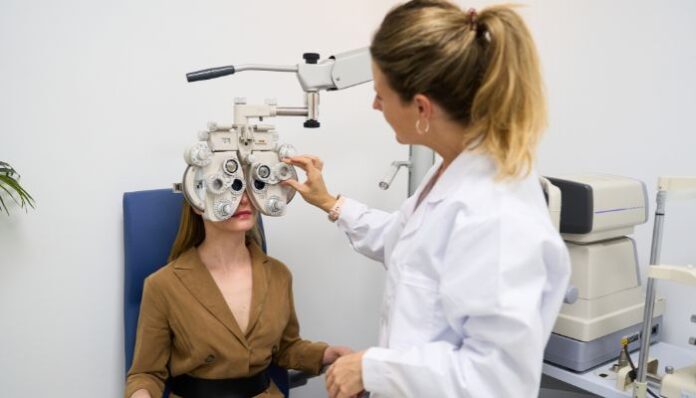
It is easy to use the laptop or phone as a convenient excuse for every symptom because they are always in front of us. But I realized my eyes deserve proper evaluation before a minor issue turns into a major crisis. A comprehensive exam can clarify whether my discomfort is rooted in dry eye, an outdated prescription, contact lens issues, or corneal health, offering invaluable peace of mind.
What I Learned About Taking My Eye Health Seriously
Ultimately, taking my eye health seriously did not mean panicking over every minor symptom. It meant being honest about how I treat my eyes.
Now, I proactively practice the 20-20-20 rule recommended by the AOA: every 20 minutes, I look at an object 20 feet away for at least 20 seconds [1]. I blink more intentionally, adjust my ambient lighting, and take my contacts out earlier in the evening. Most importantly, I stopped viewing my discomfort as a personal failing. Our eyes were simply not designed to stare at glowing rectangles all day.
For those of us living in Southwest Florida, Frantz EyeCare offers a local starting point to address these challenges. Visiting their Punta Gorda location helped me determine whether my tired eyes were tied to dry eye, contact lens fit, or a prescription change. I learned that “normal” should never be a synonym for discomfort that we have simply trained ourselves to tolerate. Sometimes our eyes just need rest—but sometimes, they need a professional look.
References:
[1] American Optometric Association. (n.d.). Computer vision syndrome.
[2] American Academy of Ophthalmology. (2025, December 5). Digital devices and your eyes.
[3] National Eye Institute. (2025, August 6). Dry eye. National Institutes of Health.
[4] Mayo Clinic. (2024, July 2). Eye floaters: Symptoms and causes.
Feature image from Canva.