
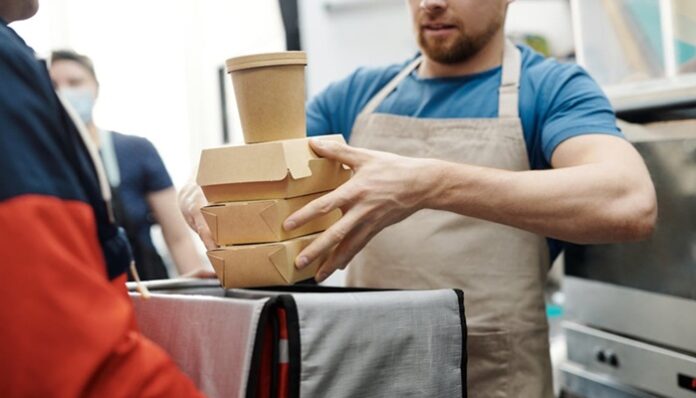
To be blunt, I needed extra cash because I am feeling the financial pressures of inflation and economic uncertainty. The Economic Policy Uncertainty Index hit 428.9 in January 2026, which is a historical high since 2020. High economic uncertainty dampens trade volumes, impacts GDP growth, and individuals and business delay financial decisions. The median age for a first time homebuyer in the United States is now 40 years old according to the National Association of Realtors. 8.9 million Americans are working multiple jobs. In this economy, clipping coupons is not sufficient enough to pad your income; you need another job. I started doing gig work like UberEats and Instacart for a week. Here are my thoughts.
1. Stick to one or two orders a day.
In this economy, especially when everything, and I mean EVERYTHING is getting more expensive, everyone, we could all use extra income. When you first sign up for gig work, you might feel ambitious and want to take on a few jobs at once. However, once you start, it is difficult to get offline for the day because it feels like you are leaving money at the door. Instacart and Uber especially feels rewarding when you see your daily earnings, and the thought lingers in the back of your mind, “Just 10 more minutes.” Suddenly, you are 20 miles away, and you have to spend an hour getting back home.
2. It’s not meant to be a full time job.
I have noticed that a lot of people give lousy tips. Maybe because these apps already charge fees that make delivery already pretty expensive. If you want to earn a quick $15 bucks picking up someone’s food or groceries on your way home, that is tomorrow’s lunch!
3. You put a lot of miles on your car.
You mainly rely on tips for most orders, and you have to be pretty selective which orders you get. The market for gig workers is pretty saturated, so good orders, which are called “unicorns” go quickly. You also have to be choosy when you work. The peak times for my area are around 4 a.m., noon, and 6 p.m.
4. Be aware of your surroundings.
Just like when you run errands, be careful, and if you do not feel safe, cancel the order. Your personal safety is paramount. Also, focus on the road. The apps may alert you of another order (and the alarm is pretty loud), ignore it.
5. The flexibility is really nice, and you can get an instant payout for a fee.
Sometimes, you just need cash, even if it is just twenty dollars. I would highly recommend using this as a stepping stone to figure out how to diversify your income streams.
6. Listen to an audiobook.
On your way to deliver something, deepen your knowledge with an audiobook. Listen to something productive, so you can expand your mind. Delivering and picking out groceries feels pretty mind-numbing, so keep your brain active with an audiobook. Although, sometimes I really like grocery shopping.
7. It makes me happy when I pick out a good potato.
I am particular about my groceries. Although I might be biased here, I select pretty decent produce. When I do my own grocery shopping, I will spend a solid 5-8 minutes trying to find the perfect tomato or potato. I did the same for customers this week, which slowed me down. Then, I could not stop thinking about what they think a good potato or tomato looks like. What do they think is a good selection of meat? I like leaner meats. Do they like marbling on their steak? Why would you let someone else pick your meat? Do you care what you get? I asked too many questions while only completing a few orders this week. I hope they were happy with the selections they received.
UberEats is my least favorite app. Instacart is better, and although I am proud I made a little extra cash, I would prefer just working a standard job. Gig work is perfect for people who are going back to school and want flexibility. I will warn you though. If you are going back to school or just need extra cash, it will be very difficult to stop working. The apps ding every time there is a new order, and the app creators have gamified deliveries. You have to set a limit and stick to your own boundaries, even if you did not make what you wanted that day or week.
Featured image via Norma Mortenson on Pexels



















Learning how to bet on World Cup 2026 becomes easier with platforms that include live odds, match analytics, and flexible betting tools. Many users start with low-risk wagers before exploring accumulators, player props, and in-play betting during major matches.
The insights shared in “What I Learned From Doing Gig Work” really hit home, especially the parts about how draining it can be to trade your time strictly for micro-transactions and rigid task checklists. When you are constantly bouncing between freelance gigs just to keep up with inflation, you start to realize how much you miss genuine, collaborative environments that aren’t tied to a corporate payout or profit margin. Spending so much time in the isolated gig economy is exactly what pushed me to look for places that focus on human connection rather than monetization. For instance, I recently came across the platform layout of this independent French cultural hub and theater workshop network: https://lesallumes.org/. It’s a great example of a grassroots space built purely for creative experimentation, amateur acting classes, and neighborhood projects without the constant pressure of a commercial structure. Finding non-profit, community-led initiatives like this really helps restore that sense of shared balance after grinding through a long week of solitary freelance tasks. For those of you managing a heavy side hustle or freelancing routine, do you find it necessary to join local creative groups or non-commercial spaces to avoid burnout, or do you prefer keeping your free time completely unstructured?