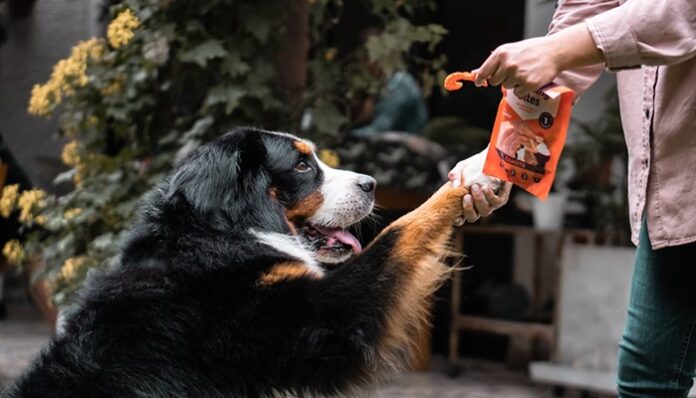
My dog is terrified of the vet. The first time we went to have his blood drawn, the tech nicked a nerve, causing him to scream in pain and bolt.
We’ve had happy visits where we go, get on the scale, receive treats from the techs, and then leave. But he still won’t let them touch his back leg for blood draws.
He wouldn’t do anything aggressive; he doesn’t know what aggression is. He’s the gentlest giant, weighing in at 91 pounds, and is stronger than three people.
Today I took him in to try for a 4th time to draw blood. He needs this done so he can get heartworm preventative, which is important. They had me give him 200mg of trazodone before the appointment. He’s never taken any anxiety meds before, so I wasn’t sure how he’d react.
This time, when we walked through the vet doors, he didn’t start panting or pulling backwards on the leash. He walked in tentatively, taking in the sights and smells, and looked around, slowly entering.
I felt his calm energy on a cellular level, and it settled my nervous system.
The technicians took their time getting comfortable with my dog. They looked away when tossing treats and worked up to feeding him from their hands. They sat facing away from him at the beginning, and then slowly turned toward him. In addition, they moved slowly and gently in the room, so my dog remained calm.
Slowly, the technician got everything set up. I held my dog’s collar and fed him a handful of bacon. We got the blood we needed, and then we celebrated by tossing treats and bacon bits on the ground, letting him give kisses (his favorite reward), and “wiggle worming” (wiggling between my legs back and forth a million times).
We checked out and left the building. He shook off that scary event and then acted like his normal self.
When we first entered the room, I felt the same feeling I get after a ketamine session: peace and space to discern risk.
I get ketamine injections combined with therapy for my PTSD. After each session, I feel like I can finally see from a balanced and clear perspective for the first time in my whole life.
When Blizzard looked around the room and sniffed the air, I felt like he was experiencing the same calmness I feel after my injections.
PTSD is PTSD. Dogs can get it too. And when you find a medication or a therapy that helps, by all means, try it. Being anxious all the time is detrimental to your health and sucks the joy out of what can be a cool world to explore. But nobody, not human nor dog, can enjoy life if they are struggling with symptoms of PTSD or anxiety.
My dog won’t need to be slightly sedated all the time — just to keep him comfortable at the vet, which is his PTSD trigger. He’s calm and laid back in all other situations.
But that’s similar to humans. I’m fine in most situations. But sometimes the wind hits me in a way that triggers my flashbacks, and I dissociate into a tiny fearful child. I’ve worked hard to control my triggers using exposure therapy, and I do the same with my dog. We’ve mastered all of his fears using techniques I learned from being inpatient at a treatment center for my PTSD.
Just a month ago, I was afraid to bring my dog to a place with kids (which was a major hurdle for him to overcome). We started by watching kids on YouTube for a couple of days, then gradually got closer to them. I always kept an eye on him and didn’t push him too far. We even drove by a crowded playground with the windows down and hung out on the beach where kids were playing. We went out for ice cream with the kids and even played with two twin boys during a game of pickleball. And the best part? One of the twins actually came to train with him, and now he’s completely overcome his fear!
I had to do the same thing for myself.
The only difference was in my behavior. During exposure therapy, I was terrified of germs, having to touch the toilet seat without washing my hands. For weeks, I tried to do it, but just couldn’t follow through; it felt too gross.
I broke it down into steps. First, I touched the toilet seat and washed my hands. Next, I touched it with one finger and didn’t wash my hands. Then, I tried with two fingers. The ultimate goal was to touch the toilet seat and then eat something afterward. In my case, that was a once-in-a-lifetime challenge. I’m okay with touching the toilet seat, but I’m definitely drawing the line at not washing my hands afterward.
If you have an anxious or fearful dog, or if your dog is a rescue and is developing different fears, I highly recommend using exposure therapy, just like you would for a human. Start slowly and keep your distance from the trigger. If medication is needed to help overcome the fear, I suggest talking to your vet. I was hesitant to give meds to my dog, but I’m ultimately glad I did.
With enough positive experiences (even on meds), you can help make future vet visits, or whatever your dog is scared of, less terrifying the next time.
Featured image via Nicole Calmet on Unsplash