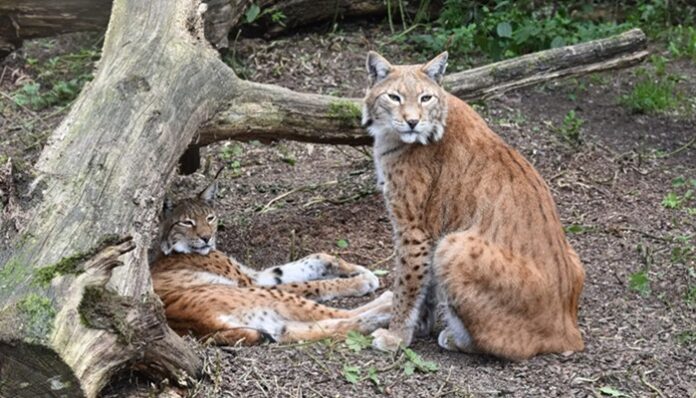
Are you passionate about all kinds of cats and enjoy watching documentaries? If so, the film “Saliega’s Lineage: The Return of the Iberian Lynx” might be perfect for you. The scientists still raise primates, birds, and felines in the same zoo where they bred Saliega’s family of lynxes. It is thanks to Saliega’s superb mothering skills that her offspring and their offspring can survive in the wild today.
In the early 2000s, the wild Iberian lynx population in Spain’s deserts sadly declined, with only about 150 remaining along the Iberian coast. Rewilding these cats in Spain’s forests proved challenging, especially for the rare Iberian lynx, which faced near extinction due to prey loss, human hunting, and habitat fragmentation. To address these threats, a team of Spain’s top veterinarians, scientists, and researchers began studying, monitoring, and breeding the lynxes to improve their chances of survival in the wild. Have you ever cared for a stray cat or kittens? It’s quite similar to caring for lynxes, except these cats are larger than the average house cat, which helps them better adapt to life in their natural habitat.
What sets these cats apart from animals like tigers or snow leopards is their amazing stories.
Hearing this might inspire you to visit Spain’s coasts. Whether to see the lynx or support conservation efforts, a trip dedicated to helping the lynx seems worthwhile, especially since scientists recently sequenced the Iberian lynx genome. If you have a pet cat, spotting one in the wild could feel like seeing a familiar housecat or kitten.
In a different case involving another cub, the mother refused to care for her only offspring. This unusual situation required an experimental intervention to save the cub’s life. It was quite a dilemma for ANY cat! Ultimately, the scientists moved the cub to the den of another mother cat, who accepted it and cared for it well. Providing veterinary care for all cats is essential for their health, survival, and the control of prey populations such as rodents and rabbits.
If a conflict occurs between two “kittens” in the pen, scientists typically allow the mother and kittens to settle it themselves. However, in emergencies, they intervene. This can happen when a puppy faces a real threat of death or another serious danger. It’s similar to how a teacher steps in during a fight on the playground.
The lynx mainly preys on rabbits, and it needs to catch at least one each day to survive.
Despite this, young lynxes see rabbits more as “playmates” than as prey to be stalked or hunted. Would a child attack a rabbit? In their innocence, the answer would mostly be no.
Care is taken to observe how the cubs interact with prey, whether they are “innocent or decisive,” and, finally, even who gets the prey taken away from them! It’s similar to how a new litter of kittens establishes the runt versus the pack leader.
Apparently, before the rewilding of Saliega’s adult cubs took place, a fire near the zoo broke out, but the dedicated scientists managed to get most of the cubs and adult cats out. Afterward, when finally released, the lynx seems to adapt effortlessly to its new habitat, helping to keep other species alive by keeping the rabbit in check.
The journey to rewild the Iberian lynx is lengthy but rewarding, illustrating that conservation efforts, whether through breeding or showcasing their playful nature, are worthwhile. The Saliegas Lineage demonstrates that, with some support, these cats can reproduce, thrive, and ultimately survive in the wild. Currently, Saliega is retired but still helps zoo patrons understand conservation efforts. Each time you see your house cat, it should serve as a reminder of the endangered lynx and their need to return to their natural habitat, as well as the common survival traits shared among humans, house cats, and lynxes.
Featured image via Detlef Bukowski on Pexels