
“My name is Mary Katherine Blackwood. I am eighteen years old, and I live with my sister Constance. I have often thought that with any luck at all I could have been born a werewolf, because the two middle fingers on both my hands are the same length, but I have had to be content with what I had. I dislike washing myself, and dogs, and noise. I like my sister Constance, and Richard Plantagenet, and Amanita phalloides, the death-cup mushroom. Everyone else in my family is dead.”
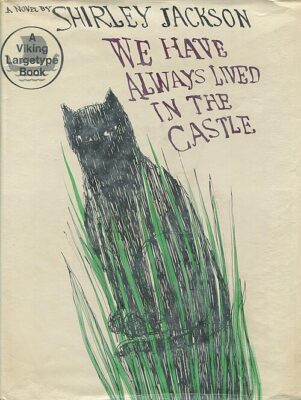
With these first few lines begins “We Have Always Lived in the Castle,” one of Shirley Jackson’s last novels. Published in 1962, this novel commences in a small, unnamed village, as the protagonist, the solitary Mary Katherine Blackwood, makes her way to the general store. The book follows Mary Katherine — often called Merricat — and her sister, Constance, as they, the subjects of their fellow villagers’ disgust, live an isolated existence in the Blackwood manor. Six years later, the girls have settled into a peaceful routine when their cousin, Charles, arrives for a visit.
And then, their peaceful life begins to crumble.
From the very first page, the general miasma of this novel — thick, dark, and haunting — settles over the reader like a cloak. Mary Katherine — often called “Merricat” — immediately informs the reader of her family’s particular station in the village (rich), the state of most of her family members (dead), and how disgusted Merricat herself feels in the village. Her voice is strong and opinionated, but she recounts everything that she possibly can.
At least, that’s what Merricat wants you to believe.
As “We Have Always Lived in the Castle” progresses, and you meet more characters, Merricat begins to show her true colours as an unreliable narrator. You’ll learn about the implications on the Blackwood family’s life pre-poisoning, and the suspicion floating about who actually conducted the poisonings and meet Merricat’s skittish, homely older sister, Constance, and the sisters’ obsessive uncle, Julian, and question everything. Jackson is clever in her writing, and in a mere 149 pages, she manages to craft a novel of sheer terror, misdirection, and surprise that will hook you and never let go.
Jackson’s prose is unsettling in its beauty and eerie in its simplicity.
Each room of the manor is described enough to convey the majesty of the place, but not enough for the details to latch into your mind, much like the actual backstories of the Blackwoods themselves. Jackson’s writing style adds a subtle air of mystery to the novel, and the constant uncertainty over what’s real and what’s not creates a pounding dread in your mind. It’s a bubbling stew of sugar and berries and poisons and talismans, and once you drink this book in, you can never forget it.
If you’re drawn to gothic fiction with domestic horror elements, gripping plot twists, and fascinating characters, then Shirley Jackson’s “We Have Always Lived in the Castle” is for you. Just don’t expect a happy ending, and stay away from the blackberries!
Featured Photo by Paul Bacon on Wikimedia Commons.




















For fans exploring the eerie atmosphere of this gothic tale, understanding the significance of place and ownership adds another layer to the narrative. If you’re curious about how real-world Sevier Home Values reflect historical and community influences, it can offer an interesting parallel to the story’s themes. The way property and legacy intertwine in the novel mirrors how location shapes identity in actual neighborhoods. Exploring these connections might deepen your appreciation for the author’s meticulous world-building.
While diving into Shirley Jackson’s haunting masterpiece offers a thrilling escape, balancing literary adventures with practical interests can enrich your perspective. For those curious about real-world estates and valuations, exploring Glynn Property Insights might provide fascinating parallels to the novel’s themes of inheritance and place. Whether you’re analyzing fictional manors or real holdings, understanding property dynamics adds depth to both reading and life. Happy reading, and may your discoveries—literary or otherwise—be rewarding!
One of the biggest strength of geometry dash is its refined gameplay system. The controls are highly responsive, while the precise hitboxes make the difficulty feel fair.