In our society, cats, dogs, and other animals are often regarded as objects to be owned or discarded at will, rather than as beings of value to society. Homeless animals are frequently seen as a burden or bothersome refuse that can be easily ignored. We don’t treat the welfare of these creatures with as much social responsibility as we should, and the animals have no voice in their fate.
Recently, I learned about a healthy but elderly, blind kitty that was left on a local state highway with the intent of being run over. Fortunately, a kind motorist stopped, rescued her, and took her to a shelter where she was adopted. From briefly fostering her, I saw that she was healthy, sweet, and spent her time sleeping—her only crime was being blind.
I was appalled that anyone who had once cared for the kitty could be this cruel and unfeeling. They could have simply dropped her off at the local animal shelter, but they didn’t. Why?
The Fundamental Problem of Empathy Deficiency and the Fallout to Society
People lacking empathy often move elsewhere and abandon their pets. It leaves them to fend for themselves after being used to regular care and feeding. Rescue organizations have found many abandoned animals chained up without shelter from the elements or access to food and water.
The reason that nonprofit animal shelters are frequently overcrowded, financially struggling, and lacking space for new strays is that so many pets are abandoned. This usually damages the entire shelter system across the area, leading to situations where necessary surgical procedures for low-income animals are sometimes denied.
A 2019 review of 32 studies found that cruelty to animals in youth is later linked to violence and bullying. This makes this a violence prevention issue that also affects human safety.
The Hidden Benefits of Companion Animals to Humans
What our society doesn’t seem to realize is that animals provide practical benefits. A 2002 study found that companion animals can improve our cardiovascular health. Additionally, feral cat programs adopted by American prisons have consistently helped inmates reduce anxiety.
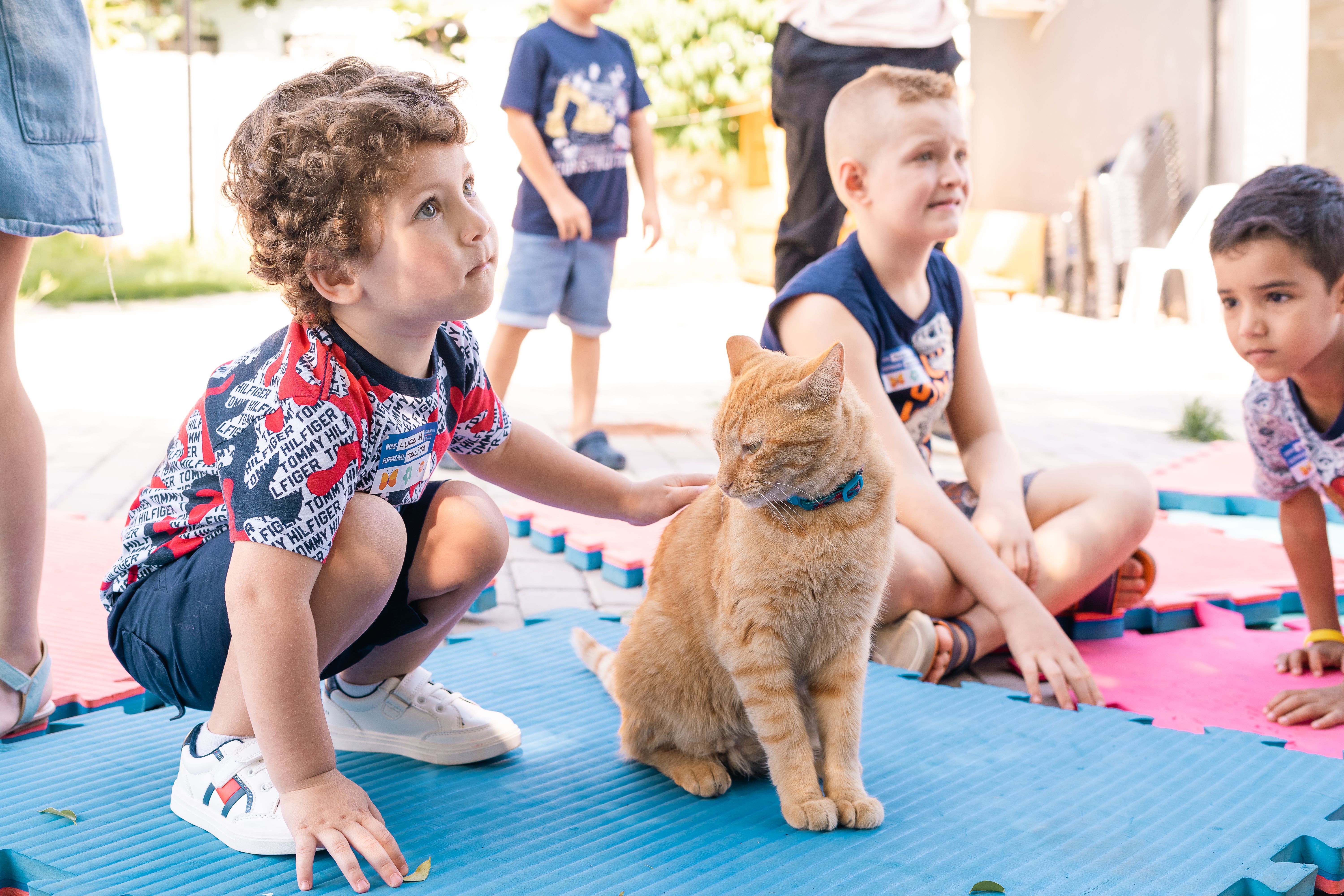
We clearly need to teach children early on to foster compassion and empathy for all kinds of animal life. “Humane education,” as it’s called, also helps stop children from becoming bullies and violent offenders later in life.
How “Humane Education” Has Already Been Implemented in Some States Through Charitable Organizations
Currently, there is no nationwide requirement for “humane education” in public schools. However, 15 states have now explicitly mandated humane education laws for children. So about one-third of K-8 American students have received formal instruction. Another 14 states have encouraged it.
Most mandated instruction for schoolchildren, however, occurs mainly through partnerships with humane societies, shelters, and other nonprofits that manage entire programs for the schools. The instruction is integrated into science, civics, and social-emotional learning classes. Children learn about empathy, preventing animal abuse, and environmental conservation.
However, it’s important to recognize that many school districts that use shelter- and charity-run programs offer only occasional lessons rather than full curricula, and that statewide participation is rarely tracked. As a result, the instruction is inconsistent and lacks standardization.
What We Need to Implement Nationwide “Humane Education” for K-8 Children Using Standardized Instruction
Every child should learn responsibility and compassion for animals as part of their education. We need to increase the number of states with humane education statutes that contain some variation of explicit language about“ kindness to living creatures” from 10 to 50 for K-8 students nationwide. However, the 10 states that already have explicitly worded humane education laws need to amend them with standardized curricula. These states are California, Florida, Illinois, Maine, New Jersey, New York, Oregon, Pennsylvania, Washington, and Wisconsin.
Two other states—Massachusetts and New Hampshire—have humane education laws but lack the explicit language required for “kindness to living creatures.” The remaining 38 states without any statutes need to pass clearly worded laws that include standardized instruction.
Please reach out to your legislators to encourage them to pass the relevant laws. Send letters, call their offices, and express your views on social media.
We can shape our children’s character to be more compassionate and responsible citizens by providing them with consistent, high-quality humane education. This approach will strengthen the mutually beneficial bond between animals and people, leading to a happier, safer American society.
Please spread the word and do your part today!
Featured image via Pexels