
We hear some of the simplest truths so often that they lose their weight. We nod at them, but we don’t fully connect with them. One of these truths is that dying isn’t the answer to life’s problems. People say this when others struggle, as though it’s an obvious fact. I myself have heard it at least 100 times. But like many basic truths, its meaning didn’t reach me until it arrived clothed in a story — until it hit me in a way that nothing else ever could.
For me, that moment came not from a sermon or a philosophy book but instead from a quiet, lesser-known film. This was the film Like the Cloud, Like the Wind. The movie is an anime set in ancient China, against the backdrop of rebellion, betrayal, and the fall of a dynasty.
At the end of the story, the young emperor finds himself cornered. Enemies seized the palace, and their rebellion overtook everything. The emperor tries to sacrifice his own life to protect his people. In a heartbreaking scene, his first wife, Jinga, manages to speak to him. Jinga and the emperor cry, cling to each other, and share a fleeting intimacy. This being their first and last moment of physical closeness. Before Jinga leaves, she presses a gun with a single bullet into the emperor’s hand, urging him to protect himself. But as soon as she leaves, instead of choosing exile or survival, the emperor uses that bullet to end his life.
Later, Jinga gives birth to the emperor’s son, who grows up to reclaim the throne and restore the dynasty. That twist lodged itself deep inside me. It was a painful revelation of what could have been. The emperor never lived to see his son or to discover that his own son could heal his shameful reputation as the “weak link” in a long line of rulers. The emperor’s death denied him the redemption that time could have eventually offered.
It was at that moment that I finally understood that dying is not the answer to life’s problems. It’s not because life is painless or survival is always noble. This sentiment is true because life carries the possibility of change. The emperor thought that his dynasty had ended with him, but in truth, it only stumbled. His son — the boy he didn’t wait to meet — became proof that even endings can be temporary if you allow time to keep moving.
I realized then how often we give up too soon. We shut down, we surrender, and we silence ourselves. We believe that a lost battle is the same as a lost future. But the emperor’s tragedy proved that survival isn’t cowardice. Sometimes survival is the greatest form of courage. To endure shame, exile, or defeat is to leave the door open for hope to come.
Life is full of possibilities, but choosing to end a life shuts them all out. Since I watched Like the Cloud, Like the Wind, whenever I hear the phrase “Death isn’t the answer,” it no longer sounds like a cliché. It sounds like the echo of that emperor’s lost chance, and a reminder that even in the darkest times, survival holds the seeds of an unseen tomorrow.
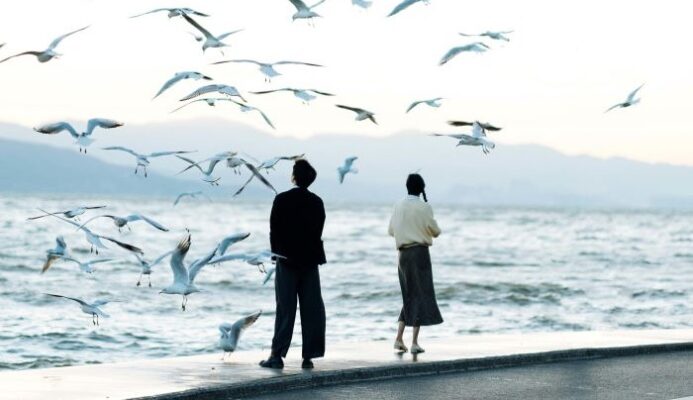
Featured image via Howen on Unsplash


















I love your content so great. Keep stickman hook
bro!!
As another great game in the Geometry Dash series, geometry dash subzero is a side-scrolling try to avoid game. You have to handle your small but fast geometric cube and try to get through a series of (significantly) difficult levels!
That’s a powerful story and a profound realization. It really highlights the potential for future positive change we deny ourselves when we give up. It reminds me of overcoming frustrating levels in Geometry Dash; sometimes you feel like giving up, but pushing through and finally succeeding is incredibly rewarding. Maybe tackling a tough level there could be a small reminder to keep going in real life too!
That’s a powerful story! It really highlights the difficult choices we face under pressure. I find I often underestimate my own reaction time in stressful situations. It’s interesting to see how people react in high-stakes scenarios, and it makes you think about your own reflexes. I’ve been trying to improve my reaction time with some online tools, actually. There’s a site that has a Cps Test where you can measure your clicks per second – it’s surprisingly engaging and a fun way to see how quickly you can react!