
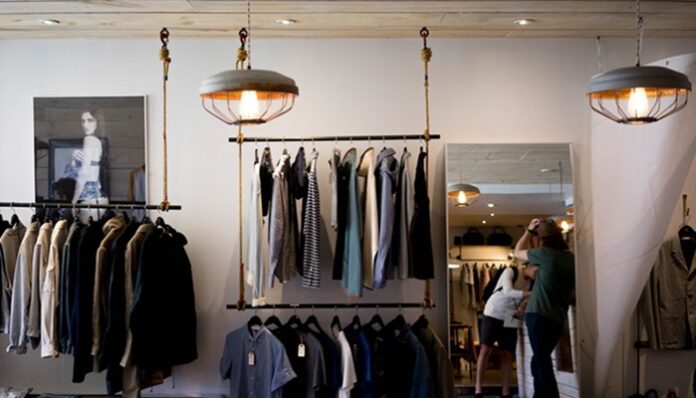
Despite being a necessity, clothing is expensive. Whether you’re looking for business, formal, or casual attire, the price tags attached never equate to the worth of the outfit.
Prices are often exaggerated by the companies selling them, with a crop top costing more than a regular one, which doesn’t make sense since it has less fabric. Most high-end brand clothing doesn’t last long term, either, focusing more on design than quality. So, why should you be paying for something that’s not guaranteed to last as long as you need it?
An easy solution that’s both cost-efficient and stylish? Thrifting.
Some of my favorite pieces of clothing I found through thrifting, buying a lot for a reasonable price. No crop tops for $30 or shoes for $100. Instead, thrifting sells gently worn clothing for typically $5, $10, or $15 per article (depending on the size and brand), featuring both new and vintage styles.
By thrifting, my closet has expanded without stressing my wallet. The clothing I buy is suitable for many occasions, ranging from job interview attire to outfits I’d wear out daily.
Despite being secondhand, quality has never been an issue for me while thrifting. Any clothing I’ve purchased at thrift stores has lasted beyond even my highest expectations, just as if I were buying right from a popular chain—except they’re not trying to drain my bank account.
This has not only allowed my closet to grow but has contributed to a bigger picture.
The clothes that go to thrift outlets are ones that might’ve just sat in the back of their previous owner’s closet, collecting dust. Yet, through thrifting, they’re given purpose again and can become a part of someone else’s wardrobe, preventing clothing waste.
Clothing waste, sometimes known as textile waste, is a huge environmental issue. It revolves around fabric and old clothes simply being thrown away and piling up in landfills.
Fibers in clothing take an excessive amount of time to break down, occupying valuable landfill space and polluting our atmosphere. Methane, a harmful greenhouse gas, is released into the air during the lengthy decomposition of clothes. An access of methane in the atmosphere only quickens the process of global warming.
Global warming only does harm to our planet.
As a component of the bigger picture that is climate change, global warming is when the general temperature of Earth’s surface increases. This affects various ecosystems, namely impacting Arctic animals as their habitats melt.
However, the harsh aftermath of global warming can be prevented by recycling.
Thrifting is a method of recycling. It focuses on reusing resources that have been tossed aside, much like well-known recyclables such as paper, cardboard, and plastic. And, while it may seem like a small difference in the great scheme of things, thrifting prevents further harm from being inflicted on our environment.
By simultaneously letting individuals find themselves through style while also preserving the world, thrifting is an amazing process.
Featured image via Clark Street Mercantile on Unsplash


















Kia ora from Wellington! After a long week at work, I decided to stay in and relax with some roulette. I joined a table through https://cosmo-casino.nz/bonus and started betting small. The first few spins didn’t go my way, but then my number landed twice in a row. It turned what could have been a quiet Friday night into one with a little extra excitement and a nice balance boost.
CM Sports mma fight wears https://www.cmsportsltd.com/ is designed for maximum durability and comfort, supporting athletes in every move. Its high-quality fabric and modern style make it a reliable choice for fighters.