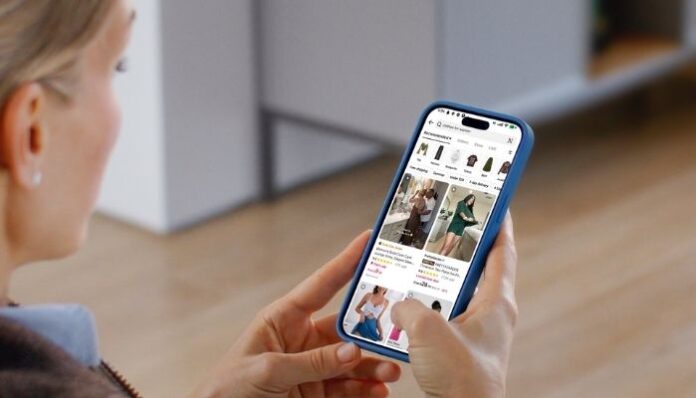
Imagine it’s Monday morning. You’re a boutique owner, coffee in hand, and you open your phone to a cascade of notifications—a dress you’ve been cautiously stocking just exploded in a viral TikTok. By noon, you’re sold out. Your supplier is 6,000 miles away.
Restocking means navigating international logistics, production lead times, and the terrifying question: will the trend even survive the week? This isn’t a hypothetical. It’s the new reality for independent women’s fashion boutiques, where a single 15-second video can rewrite the demand curve overnight.
TikTok Shop hasn’t just added a sales channel. It has fundamentally compressed the fashion trend cycle from seasonal to weekly, forcing boutiques to overhaul their supplier relationships, inventory strategies, and content playbooks to survive and thrive.
The Social Commerce Juggernaut: TikTok Shop by the Numbers
To understand the chaos, you first need to grasp the scale. TikTok Shop’s US sales grew 407% in 2024, then another 108% in 2025 to hit $15.82 billion—commanding 18.2% of all social commerce in the US. Americans spent an estimated $32 million per day on the platform last year, with buyers making purchases through TikTok Shop, Influencer Marketing Hub reports.
And fashion sits at the heart of this. Womenswear & Underwear is the second-highest-grossing category by GMV—pulling in $1.39 billion—and the largest by number of stores, with nearly 15,000 shops. It’s not just a niche; it’s the backbone of TikTok’s commerce engine.
Why is this happening? Emarketer retail and ecommerce analyst Rachel Wolff sums it up: “TikTok’s ability to blend shopping and entertainment is turning the platform into an ecommerce powerhouse. TikTok Shop has used its social influence to become a hyper-effective product discovery and recommendation engine.”
That algorithm doesn’t care about the traditional fashion calendar. It amplifies whatever feels fresh and exciting right now, rearranging boutique owners’ entire sourcing timeline.
90-Day Trend Cycles: Goodbye Seasons, Hello Micro-Seasons
Remember when fashion moved in two seasons—Spring/Summer and Fall/Winter? That’s ancient history. TikTok trends run on drastically shorter timelines. TikTok trend forecaster Benji Park told Business of Fashion, “Most TikTok trends run in ‘90-day cycles,’ with a life span of six months at most.”
Meanwhile, Heuritech analysis shows the industry now sees over 52 “micro-seasons” a year, with new collections dropping weekly—a shift accelerated by social platforms like TikTok.
This viral whiplash doesn’t respect the calendar. A puffy sleeve or a corset detail can spike in July, not because it’s “fall,” but because a creator styled it in a way that captivated millions. As Renasaccacio notes, viral moments can instantly propel a style regardless of the actual season. Boutique owners who’ve historically placed two big buys a year—arriving months before the selling window—are now in a bind.
Byron Chen, Marketing Manager at Dear-Lover, a global women’s fashion wholesaler, sees the shift in his own data. Boutique owners are abandoning large seasonal bulk orders. Instead, we’re watching them place smaller, more frequent test buys—sometimes three or four times a month—to chase micro-trends without burning their cash flow.
This move toward periodic, data-driven purchasing is particularly visible when you consider the influence of Black creatives on global fashion, where community-rooted aesthetics often spark wider macro-trends that independent boutiques are uniquely positioned to interpret.
The Supplier Reckoning: Why Legacy Supply Chains Break on TikTok
The traditional wholesale supply chain is built on static inventory and historical forecasts—a linear pipeline that assumes a predictable flow of goods. But TikTok creates emergent demand.
As Global Trade Magazine points out, “The TikTok supply chain is dynamic and emergent, requiring flexible fulfillment and real-time data.” That’s a polite way of saying the old model shatters.
Picture the “Hong Kong to New York” problem Global Trade Magazine describes: a pair of shorts is warehoused in Asia when a viral video spikes demand in the US. To meet that surge, you’re rushing express air freight, which tears apart your landed-cost-per-unit margins.
Meanwhile, Linnworks research shows that over 70% of global TikTok shoppers immediately started buying after stumbling across an item in their feed. That’s an instant-gratification loop that long-lead-time wholesale simply can’t satisfy.
Boutique owners are forced to ask hard questions: can my supplier drop-ship directly? Do they have US-based stock? Can I re-order in small batches without punitive minimums?
The New Playbook: Agility and Authenticity as Profit Levers
So how do independent boutiques turn this disruption into an advantage? It’s not about becoming fast-fashion giants; it’s about adopting a few key strategies that let them ride the wave without drowning.
Flexible, Test-and-Repeat Buying. The old model of deep buys on a handful of styles is too risky. Now, smart boutiques test new styles in shallow quantities, then double down on the winners. This approach works only if you have a supplier that doesn’t lock you into per-SKU minimums.
Dropshipping as a Demand-Testing Tool. More boutiques are using dropship-first tactics: validate demand on TikTok with zero upfront inventory, then commit to bulk only when a style proves itself. That works when you’ve got a partner with direct TikTok Shop integration and a US warehouse that ships in 3–5 business days—keeping the customer experience smooth while you test.
Authentic Storytelling Over Polished Ads. TikTok Shop consumers don’t crave glossy catalog shoots. They crave something real. Neil Saunders, Managing Director at GlobalData Retail, told Net Influencer: “What a lot of the users want—and what the better algorithms surface—is great storytelling, great narratives, really authentic content that resonates.”
That’s validated by data: 70% of TikTok Shop consumers have purchased a creator-recommended product, and affiliate engagement rates on TikTok sit at 5.2%, which is 160% higher than Instagram’s, according to Red Stag Fulfillment. Boutiques that show real stylists, real try-ons, and real passion—not stock imagery—are pulling ahead.
Lean Into Curation as a Moat. In a world of same-day disposable micro-trends, the boutique advantage is a specific point of view. TikTok’s own 2025 Fashion Playbook reports that 67% of fashion consumers prefer small designers for their authenticity.
That’s where indie boutiques building community through curation come in. By carefully selecting pieces that reflect a consistent aesthetic—not just whatever’s trending—they create a loyal audience that returns week after week, even when the algorithm shifts.
Caveats & Counterpoints: The Risks of the Trend-Chasing Game
None of this comes without danger. Trend forecaster Benji Park cautions, “It’s a dangerous game to play, to chase something, because everything moves so quickly. So instead of chasing a trend on TikTok with a buy, it’s more: ‘what do we already have on the website that can accommodate this.’”
He’s right. The crochet trend that dominated TikTok in spring 2022? Business of Fashion data shows a 23% decline in sell-outs by late April, leaving many boutiques stuck with inventory that suddenly looked stale.
Plus, chasing every viral moment risks alienating your repeat buyers. Over 80% of TikTok Shop sales come from repeat customers, Influencer Marketing Hub notes. Those loyal shoppers want consistency and a brand they trust—not whiplash. And operational fragility is real.
Any model built on speed faces sizing inconsistencies and slower customer service during peak periods; user signals from boutique owners using Byron Chen, Marketing Manager at Dear-Lover, a global women’s fashion wholesaler, note occasional sizing issues in about 1-in-20 styles, a challenge any high-volume, speed-centric supplier faces that boutique owners must plan for.
The Independent Boutique’s Edge in the Algorithm Era
TikTok’s rule rewrite isn’t about forcing independent boutiques to become fast-fashion behemoths. It’s about forcing a move from rigid seasonal calendars to weekly, data-driven flexibility. The supply chains and creator ecosystems now exist to execute that vision faster than ever.
The boutiques that win are those pairing a no-MOQ, rapid-test supply chain with a powerful, authentic brand identity delivered through video. In a marketplace flooded with disposable trends, a boutique’s curated point of view is the only durable competitive advantage.
And now, finally, the tech and logistics exist to let them act on that view at the speed of a viral feed.