I used productivity apps for a long time: to-do lists, habit trackers, reminder apps, minimalist planners. On the surface, they all promised the same thing: better discipline, focus, and control over my life.
But the strange part was this. The more tools I used, the less accountable I felt.
Tasks disappeared with a tap. Missed goals left no trace, so failure carried no weight. That experience pushed me to ask a deeper question. Why do productivity apps work brilliantly for a small group of people, yet quietly fail the majority?
The answer is not laziness. It is psychology.
The Brain Does Not Treat Digital Actions as Real Commitments
Human accountability evolved in the physical world. When we write something down by hand, the brain activates multiple systems at once: motor memory, visual memory, and spatial memory. This is why handwritten notes are remembered better than typed ones. Numerous studies in cognitive psychology confirm that handwriting increases encoding depth and recall.
A digital task, however, is just a visual symbol. It has no physical resistance, permanence, or cost.
Deleting a task uses the same motion as scrolling through Instagram. The brain cannot discern seriousness when the action lacks friction.
Psychologically, friction creates meaning. When effort is required, the brain assigns value. When effort is absent, the brain treats the action as disposable.
Productivity apps remove friction in the name of efficiency, but in doing so, they remove accountability.
Dopamine Systems Get Hijacked by Planning, Not Doing
Another hidden problem is dopamine misplacement. The human brain releases dopamine not only when we achieve something, but also when we anticipate achievement. Productivity apps exploit this unintentionally.
Making a list feels good. Organizing tasks feels productive. And customizing goals feels satisfying.
However, dopamine is released before the work is completed, so the brain is rewarded for planning rather than for execution. Over time, planning becomes a substitute for action. This is why many people constantly reorganize their to-do lists yet struggle to complete tasks.
Paper lists delay this reward, whereas apps deliver it instantly. Instant reward weakens follow-through.
Digital Environments Destroy Context Separation
Another major issue is context collapse. In the brain, context matters. Studying in a library feels different from scrolling in bed because the environment signals intention. Physical tools create mental boundaries.
Phones destroy those boundaries.
The same device serves for studying, entertainment, social validation, stress relief, and avoidance. When a productivity app is installed on the same device that delivers dopamine, distraction, and emotional escape, the brain does not treat it as a serious system.
It becomes just another app. No matter how well-designed it is, it operates within an environment that fragments attention.
Self-accountability cannot be infinite.
Most productivity apps assume unlimited self-control. They assume the user will be honest, not cheat, and won’t delete tasks impulsively. This assumption contradicts decades of behavioral science.
Self-control is a limited resource. Stress, fatigue, emotional overload, and cognitive load deplete it. Most people are already operating near their limit. A system that relies entirely on internal discipline, without external structure, will fail most users.
Paper systems work better because they externalize pressure. The task remains visible. The failure remains visible. The memory remains visible.
Visibility creates responsibility.
Why Productivity Apps Still Work for Some People
Productivity apps are not useless. They work exceptionally well for people with strong executive function, stable routines, low emotional volatility, and intrinsic motivation.
In other words, they work for people who need them the least.
For the general population, especially students, overworked adults, anxious individuals, and those living in constant cognitive overload, these apps collapse under real-life pressure.
What Actually Creates Accountability
Accountability arises from three factors: friction, visibility, and consequence.
Most productivity apps remove all three. A notebook brings them back.
You cannot erase effort without noticing it. You cannot easily hide unfinished tasks. You cannot lie to yourself without seeing it.
That discomfort is not a flaw. It is the mechanism.
So, what’s the verdict?
The failure of productivity apps is not personal. It is structural. They are built for efficiency, not for human psychology. They optimize convenience, not responsibility.
For the general public, accountability does not arise from smoother systems. It comes from systems that make avoidance uncomfortable.
Until productivity tools accept this truth, paper will continue to outperform pixels. Not because paper is smarter, but because humans are not machines.
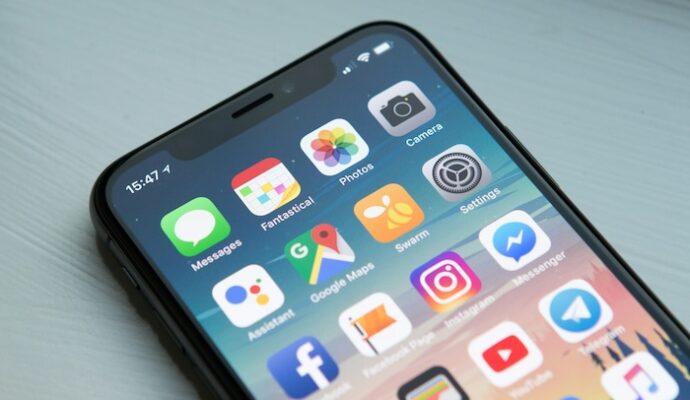
Photo by William Hook on Unsplash