
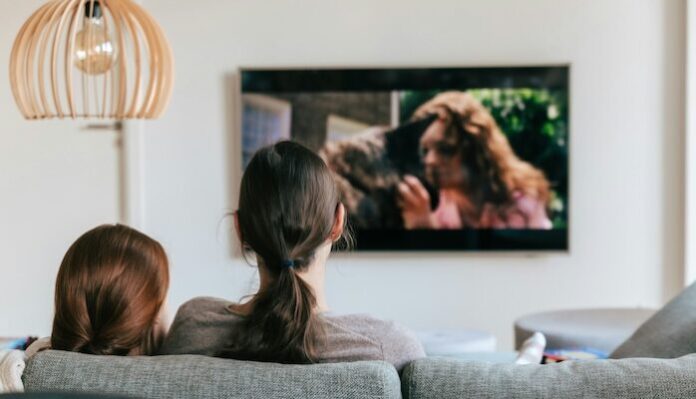
This past weekend, I committed a reader’s gravest sin: I watched a movie before I read the book it was based on.
As a lifelong bookworm with a proud and firm “read the book first” mindset, I’ll be the first to admit that the choice wasn’t easy for me. But when my family made last-minute plans to watch “Project Hail Mary” in theaters, I realized there was no feasible way for me to read an entire novel in less than 24 hours.
After resisting the immediate instinct to turn down the invite, I gathered the strength to tell myself that watching one movie before reading the book wouldn’t invalidate my identity as a reader. So I took a deep breath, left the book in my Amazon cart without ordering it, and went out with my family.
And guess what? The world kept turning, and I watched a great film.
“Project Hail Mary,” which is based on Andy Weir’s novel of the same name, premiered on March 20, 2026. This fast-paced and heartwarming space opera stars Ryan Gosling as Ryland Grace, a biologist who wakes up alone aboard a spacecraft with a mission to save planet Earth. During the movie, I laughed, I cried, and a little alien creature named Rocky stole the show.
So what now? I know the story’s plot, I know the twists and turns, and I know the ending. My younger self might consider this a deal-breaker for reading a book. Why would I bother picking it up when I know what happens?
Now, I actually feel more inclined to read “Project Hail Mary” than I did before I saw the movie. The novel’s description is very science-heavy, and I haven’t taken a biology or chemistry class in years. The unfamiliar subject matter intimidated me at first, but the film showed me how Andy Weir’s story balances scientific concepts with humor and engaging emotional stakes.
I’m looking forward to revisiting these characters and their world in a different medium. With a clear grasp on the worldbuilding in “Project Hail Mary,” I get to re-experience my favorite scenes, brace myself for the tear-jerking moments, and explore a new genre with a sense of confidence I would never have had if I hadn’t watched the movie first.
Reading encompasses so much more than just reaching the end of a book. It’s about the storytelling style, the details that stand out to you, and the emotions you feel page by page.
Should movies replace reading? Of course not, but they can offer much more value than what our modern “book culture” gives them credit for.
Maybe you’re struggling to get into a new fantasy novel because you feel like there are a hundred character names to keep track of. Or maybe that classic you keep telling yourself you’ll read is still collecting dust on your bookshelf. If that’s the case, having a visual entry point of the setting and characters might just be the push you need to actually read the book.
While film and television adaptations may not be perfect, they don’t have to be a reader’s enemy either. When a film adaptation is faithful to the original story, it has the power to guide you toward new genres, challenge you to think deeper about the plot and characters, and reframe your reading experience as a journey instead of a destination.
Photo by Kevin Woblick on Unsplash














The Māori traditions are deeply rooted in history, storytelling, and a strong spiritual bond with nature. Art, language, and community values are essential parts of daily life. At the center of these customs, Maori culture https://maorisource.com/ expresses reverence for ancestors, close family connections, and balance with the environment, helping preserve identity and heritage through generations in a lasting and meaningful way.
Interesting take—sometimes watching the movie first really helps shape how you connect with the story before diving into the book. It’s also fascinating how different formats change our interpretation of the same narrative and characters. While exploring related information, I came across useful details on Hillsborough Court Lookup that add a broader perspective to how structured records are organized. Overall, it really comes down to personal preference and how each person enjoys storytelling the most.
I totally relate to that moment of watching a film before reading the book—it feels like breaking a personal rule, but sometimes it actually deepens the experience. I’ve had similar situations where knowing the plot made me notice more subtle details afterward, almost like doing a Court case lookup on a story to understand every layer better. It’s interesting how adaptations can remove the intimidation factor and make complex themes more approachable. In a way, it proves that stories can be enjoyed from multiple angles without losing their impact.