In the decades following the end of the Cold War, liberal democracy was widely seen as the dominant and most stable political system in the world. Many scholars believed democratic governance had effectively won the global ideological contest. However, recent political developments suggest that this assumption may have been overly optimistic. Across many regions, democratic institutions are facing increasing pressure while authoritarian tendencies and populist movements are gaining strength.
1. The “End of History” Expectation Was Overly Optimistic
After the Cold War ended, many scholars believed liberal democracy had permanently won the ideological race.
Political theorist Francis Fukuyama argued that liberal democracy is the final stage of political evolution.
However, the last two decades have shown that political systems are much more cyclical. Authoritarian and nationalist movements have resurged across numerous regions.
Around the world, many democracies have experienced democratic backsliding. Hungary under Viktor Orbán, Turkey under Recep Tayyip Erdoğan, and Venezuela under Hugo Chávez and Nicolás Maduro show how elected leaders can gradually weaken democratic institutions. Similar concerns have been raised in countries like Poland, Serbia, and India. Political scientists increasingly describe this pattern as a global “democratic recession,” where democratically elected governments weaken the institutions that once constrained their power.
Democracy was never guaranteed to stay stable forever.
2. Democratic Backsliding
Political scientists refer to the current trend as democratic backsliding.
This refers to situations where democratically elected leaders gradually weaken democratic institutions, such as independent courts, free media, electoral fairness, and civil liberties.
Scholars like Steven Levitsky and Daniel Ziblatt have written about how modern democracies tend to decline not through coups, but through gradual institutional erosion.
3. Economic Inequality and the “Globalization Backlash”
Another major factor is economic dissatisfaction. Globalization has generated wealth but also caused significant inequality within many countries. Large portions of the population feel left behind by economic changes.
Economist Dani Rodrik argues that globalization often creates a tension between national sovereignty, democracy, and global markets.
When people feel their economic security is at risk, they may support leaders who promise protection through nationalism or increased government control.
4. Identity Politics and Cultural Anxiety
Political identity has also intensified. Many societies are experiencing strong debates over immigration, national identity, religion, and cultural change.
Political scientist Samuel P. Huntington argued that future conflicts would more likely center on cultural and civilizational identities rather than purely ideological struggles.
When identity becomes central to politics, compromise becomes more difficult and polarization increases.
5. The “Strong Leader” Preference
During times of uncertainty, many voters begin to prefer leaders who promise decisiveness and order.
Surveys by organizations such as the Pew Research Center and the World Values Survey have shown that, in some countries, younger generations are less committed to democratic systems than previous generations.
This doesn’t always mean people want a dictatorship. Often, it shows frustration with slow or ineffective democratic governance.
6. Information Overload and Social Media Polarization
Modern communication technologies have also changed political behavior. Social media platforms amplify outrage, misinformation, and ideological echo chambers.
This can make societies feel more divided and chaotic, sometimes increasing support for stronger authority and simpler solutions.
7. Declining Trust in Institutions
Another key issue is declining trust in institutions. Many citizens believe that institutions meant to protect democracy, such as governments, courts, media, and political parties, are no longer responsive or fair.
When trust in institutions drops, people become more willing to consider alternative forms of leadership.
A Shift Toward a Different Political Era?
Some scholars argue that the world may be entering a post–Cold War transition period in which global power structures are evolving.
Large states are reasserting influence, and geopolitical rivalry is returning.
Examples include:
- The Russian invasion of Ukraine
- Rising tensions in various global regions
- Growing strategic competition between major powers
- The escalation of tension in the Middle East
- The escalation in South Asian countries
These developments make international politics seem less stable and more competitive.
Why This Doesn’t Mean Democracy Is Ending
Although democracy faces challenges, history shows that political systems continually adapt. Democratic institutions have survived past crises such as economic depressions, world wars, and social upheavals.
The current period might be a phase of adjustment instead of a lasting collapse.
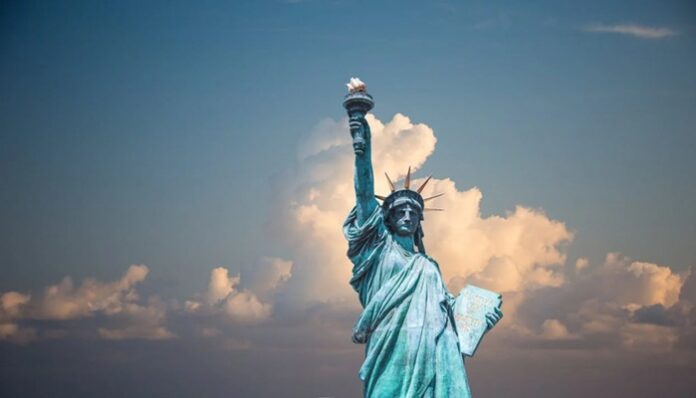
Featured image via Pixabay on Pexels