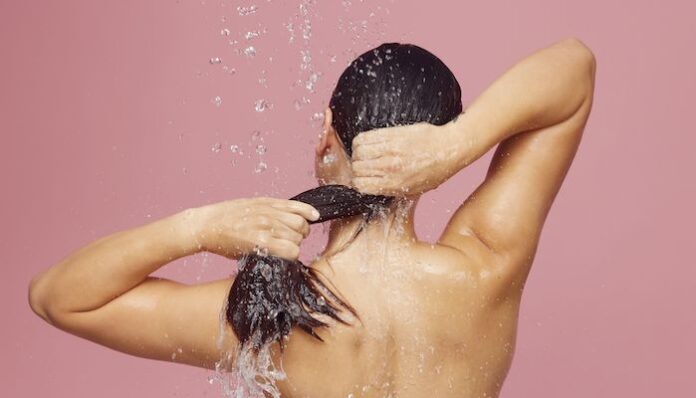
Have you ever wondered why your long-haired partner disappears into the bathroom for an hour just to “wash their hair?” From the outside, it seems impossible. How could shampooing take that long?
Even stranger, sometimes the water turns off for 20 minutes, yet they’re still in there. What could they possibly be doing?
As someone with long hair, I can tell you the answer: washing long hair isn’t just washing it.
Washing long hair involves an entire routine.
When people with long hair say they’re washing their hair, they usually mean they’re giving both their scalp and hair a deep clean – all while trying to keep it healthy enough to survive the next few days before the next wash. That means detangling, moisturizing, cleaning the scalp, protecting the ends, and drying everything properly afterward. Each step has a purpose.
The process starts before we even turn the water on. Every hair tie, clip, and pin has to come out, and we need to brush the hair until it’s completely smooth. This isn’t just about appearance. Any knots left in long hair become much tighter once they’re wet, making them difficult to remove later and increasing the chance of breakage.
Next comes one of the most mysterious parts for anyone waiting outside the bathroom: the silence.
The ends of long hair are usually the driest because they’re the oldest part of the hair. Many people lightly dampen the ends, apply a hair mask, and let it sit for 15 to 20 minutes before doing anything else. During this time, the water isn’t running because…there’s nothing to do except wait. The mask is simply soaking in.
Only after that does the actual washing begin.
We fully soak the hair, rinse the mask from the ends, and comb through everything again to make sure it remains tangle-free. Then we apply the shampoo — but mostly to the scalp rather than the length of the hair. The scalp is where oil, sweat, and product buildup collect, so that’s what needs cleaning. Using fingertips instead of fingernails, we gently massage the scalp before rinsing the shampoo away.
Then comes something that surprises many people: shampooing a second time.
The first wash removes surface oil and buildup; the second wash actually cleans the scalp. For people with long or thick hair, washing twice is common because the first round often isn’t enough.
After the scalp is clean, the focus shifts from cleaning to caring for the hair itself. Different hair types require different products. Color-treated hair often needs shampoos that help preserve dye, while curly hair benefits from products that maintain moisture and definition. We usually apply another round of conditioner or hair mask to the ends for several minutes before rinseing it out.
At this point, many people assume the routine is finished. It isn’t.
Once out of the shower, we brush the hair again, part it into place, and work a small amount of hair oil into the ends to prevent dryness. Then comes blow-drying.
Most people with long hair don’t blast it dry all at once. They often dry it until it’s about halfway finished, apply another small amount of oil to the ends, and then continue drying with a nozzle attachment to smooth the hair while brushing it. Since long hair holds far more water than short hair, this alone can take quite a while.
Only then is the routine actually complete.
So the next time your girlfriend or boyfriend with long hair disappears into the bathroom for what feels like forever, remember that they’re probably doing much more than shampooing. They’re brushing, detangling, waiting for treatments to work, carefully cleaning their scalp, protecting the driest parts of their hair, and drying it in a way that keeps it healthy.
And those mysterious 20 minutes when the water isn’t even running?
They’re probably not standing there doing nothing.
They’re just waiting for the hair mask.
Featured image via Hairlust Official on Pexels